Delhi–SNB–Alwar Namo Bharat Corridor Advances Toward Construction for the Industrial Belt
Read the full story
Delhi–SNB–Alwar Namo Bharat Corridor Advances Toward Construction for the Industrial Belt
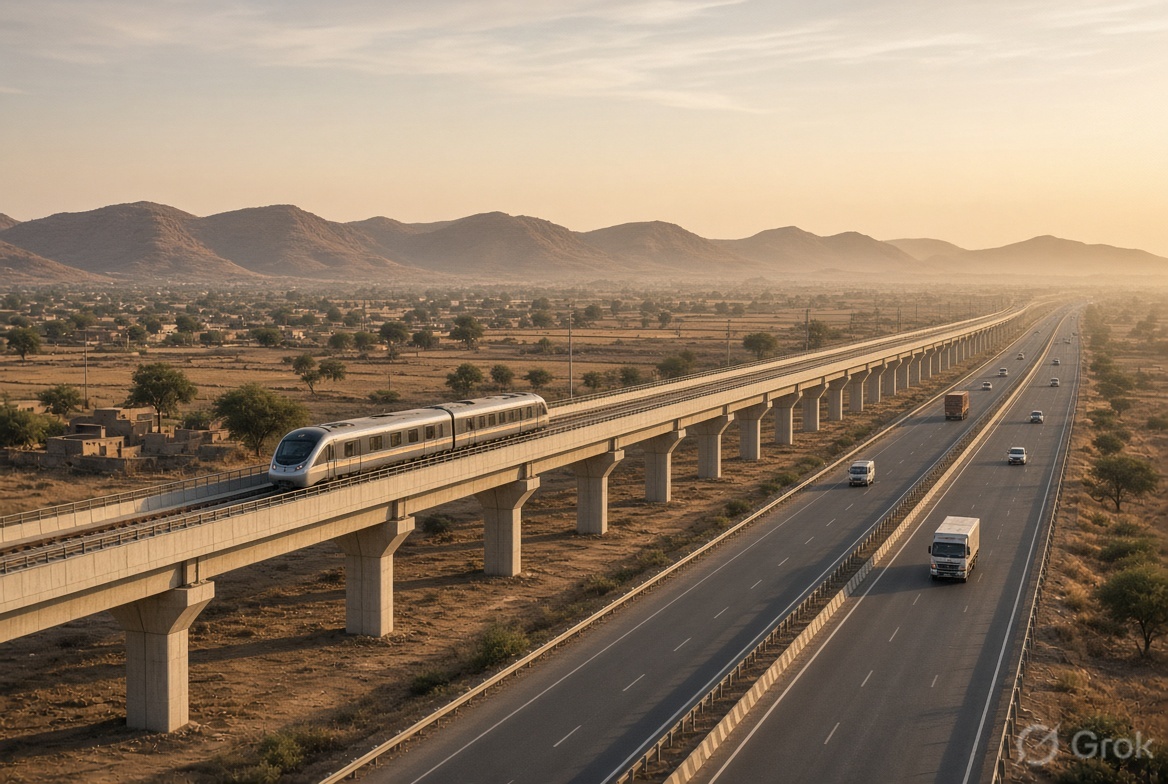
Read the full storyThe Delhi-Gurugram-Shahjahanpur-Neemrana-Behror (SNB)-Alwar Namo Bharat RRTS corridor is moving into early execution stages, with the priority stretch positioned to begin construction anytime soon once final Cabinet clearance is in place. This semi-high-speed rail link which will run at the top speed of 180 kmph will place the Neemrana Japanese Zone and the wider SNB industrial belt on a dedicated high-capacity corridor to Delhi and Gurugram.
NCRTC floated the General Consultant tender in October 2025 for the Delhi–Gurugram–SNB section. The consultant has managed design reviews, quality assurance, bid-process support and inter-agency coordination over a 60-month engagement. Pre-bid meetings were held and bids were invited, marking the formal start of professional project management. Detail Design Consultant tenders followed, further advancing technical preparation. Pre-construction work is already under way, including utility shifting, geo-technical investigations and road widening in the Gurugram stretches that form the early part of the alignment.
Haryana has approved the corridor, and cost-sharing arrangements between Haryana and Rajasthan for the sections serving the industrial belt have been discussed and advanced. The priority Delhi-Gurugram-Behror section remains under active consideration by the Union Cabinet, with NCRTC stating that approval is expected soon. The early civil construction tender for elevated viaduct on the Gurugram stretch is being invited as per reports, signalling readiness for on-ground works once the final sanction arrives.
The corridor delivers faster, more predictable movement of people and support services. Travel times between the Zone and Delhi will drop sharply compared with the present road journey on NH-48. Posted professionals and their families gain reliable access; supplier logistics become more efficient; and the industrial highway gains a parallel high-capacity rail option. The same regional rapid rail that has already demonstrated strong ridership and regional growth on the operational Delhi–Meerut line is now preparing to serve the SNB belt.

Alwar-Area Startup Partners with DRDO on Indigenous Quantum Cooling Technology
Read the full story
Alwar-Area Startup Partners with DRDO on Indigenous Quantum Cooling Technology
Read the full storyZero mK India, based in the Tapukara-Tijara belt, has signed a Technology Development Fund agreement with DRDO to develop a 20 millikelvin dilution refrigerator. The project advances indigenous capability in the ultra-low-temperature systems required for quantum technologies.
Advanced deep-tech manufacturing is now taking shape beside the established Japanese and Indian industrial zones on the same corridor. The Tapukara-Tijara area already hosts manufacturing activity; the new agreement adds a specialised technology programme that operates in the same regional ecosystem. Local engineering talent and industrial infrastructure stand to support the development of precision cooling systems that meet national research and industrial needs.
The Corridor Deep-Tech Note records the signed agreement. Japanese and Indian plants continue their production work while a new deep-tech initiative begins nearby. The partnership shows that the Neemrana-Behror-Tijara industrial belt can host both high-volume manufacturing and advanced technology development. The corridor gains a further signal of its capacity to support specialised industrial activity alongside the operating Japanese Zone.

Mirai Hills Becomes a Wellness Reality Space for Global Residents
51 companies (Embassy/JETRO, Oct 2024) — a voluntary survey.
Read the full story
Mirai Hills Becomes a Wellness Reality Space for Global Residents
51 companies (Embassy/JETRO, Oct 2024) — a voluntary survey.
Read the full storyBriston presents Mirai Hills on NH-48 near the Japanese Zone with Japanese-style LDK-format residences shaped for Japanese and Korean professionals and their families. The development now positions itself as a Wellness Reality Space where residents and club members can access specialised recovery and preventive programmes.
The space will offer post-rehab checks, diabetes management, celiac allergy support, post-operation rehab, post-cancer rehab, weight management, fatigue management and related therapies. These services draw on ancient Indian, Japanese and Chinese health, medicinal and yoga systems, delivered as a refined wellness reality by world-class providers. Japanese and Korean residents gain access to familiar and complementary wellness practices inside the same residential address that sits beside the plants. Local professionals and visiting trainers who stay longer on the corridor also benefit from structured recovery and preventive care without leaving the industrial belt.
The Wellness Reality Space adds a practical living layer to the managed residences. Furnished LDK homes already support orderly daily living close to the Japanese Zone. The wellness programmes extend that support into longer-term health management, helping posted teams and their families maintain well-being during multi-year assignments. Japanese companies gain a residential option that addresses both housing and wellness needs in one location. Mirai Hills reinforces Neemrana as a place where the living requirements of global professionals are met with refined residential and wellness capacity on the same highway as the operating plants.

Artificial Reservoir and Feeder Plan Strengthens Industrial Water Security
Read the full story
Artificial Reservoir and Feeder Plan Strengthens Industrial Water Security
Read the full storyThe state has approved a Rs.1,012-crore artificial reservoir and feeder scheme for the Neemrana industrial area, with Rs.200 crore earmarked in the coming financial year. The project creates dedicated water infrastructure that gives Japanese and Indian plants greater certainty for expansion.
A purpose-built reservoir and feeder network will supply the industrial belt with a managed water source sized for manufacturing demand. Japanese Zone plants and other manufacturers already operate with careful water practices. The new scheme adds a structured supply that supports existing production while preparing capacity for the next wave of investment. Reliable water availability reduces a key variable for companies planning longer commitments on the Neemrana highway.
The Corridor Water Security Brief records the approved scheme. Japanese and Indian manufacturers gain a clear infrastructure signal that water supply is being scaled to match industrial growth. The reservoir and feeder plan strengthens the operating conditions for plants already on the corridor and reinforces Neemrana as a place where manufacturing expansion is matched by dedicated utility capacity.
RIICO Tenders Boundary Wall for Ghiloth Green Buffer
Read the full story
RIICO Tenders Boundary Wall for Ghiloth Green Buffer
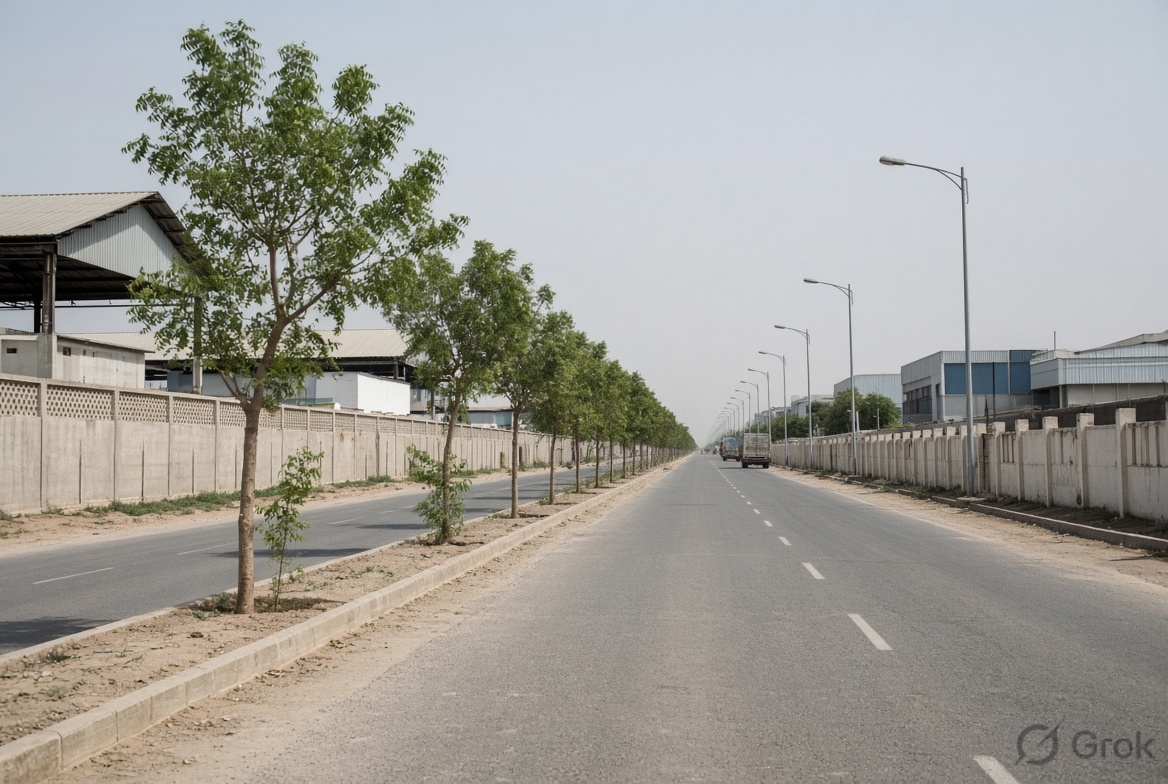
Read the full storyRIICO has issued a tender for construction of a boundary wall around the green buffer area at Ghiloth Industrial Area. The work will give the second Japanese-zone land a clearer green-edge definition, supporting future landscaping and environmental management.
A defined boundary marks the green buffer as a distinct, protected space beside the industrial plots. Once the wall is in place, planting, water-sensitive design and ongoing maintenance can proceed in an orderly way. Japanese plants in the existing Zone already maintain trees and careful water use inside their boundaries. The Ghiloth buffer wall extends the same approach to the public edge of the new area, creating a cooler, greener approach for visitors and workers.
The Ghiloth Green Edge Tracker records this tender as an active site-preparation step. The second Japanese zone gains a visible boundary that prepares the ground for both industrial activity and landscaped surroundings. Japanese and Indian manufacturers evaluating the next phase of expansion see a corridor that is defining its green edge while the land is still being prepared. The wall strengthens the environmental foundation of the Ghiloth industrial area and reinforces Neemrana as a place where manufacturing growth is matched by deliberate green-edge planning.

Hero MotoCorp Opens a Fresh Free ITI Campus Drive for the Neemrana Plant
Real water/mobility item, separate from the pitch.
Read the full story
Hero MotoCorp Opens a Fresh Free ITI Campus Drive for the Neemrana Plant
Real water/mobility item, separate from the pitch.
Read the full storyHero MotoCorp is running a free walk-in selection on 3 November 2026 for ITI pass-outs at its Neemrana plant. The drive is open to candidates from all trades in the 2022–2026 batches, both male and female, for Fixed Term Employment and one-year apprenticeships.
A major Indian manufacturer on the same highway as the Japanese Zone is keeping the local talent pipeline active. ITI graduates can walk in on the scheduled day and be considered for roles that offer clear stipend and benefit details. The dual track of fixed-term positions and structured apprenticeships gives young technicians immediate pathways into the plant. Students from Neemrana and nearby institutes gain a direct opportunity to step from the classroom into production work beside the operating factories.
The Neemrana Dual-Track Hiring Calendar records this scheduled drive. Hero MotoCorp’s campus selection comes alongside the Japanese Zone’s ongoing need for skilled technicians. Local ITI pass-outs receive a practical entry point, while the plant gains a ready stream of trained people from the surrounding area. The drive strengthens the everyday link between industrial training institutes and the manufacturers that run on the Neemrana highway, reinforcing the corridor as a place where local talent moves smoothly into the jobs the plants create.