
Rising Neemrana: Governor Bagde’s Call Turns the Japanese Zone into a Public Invitation
Read the full story
Rising Neemrana: Governor Bagde’s Call Turns the Japanese Zone into a Public Invitation
Read the full storyRajasthan Governor Haribhau Bagde addressed the Rising Neemrana event at NIIT University on 27 October 2026. He described Neemrana as an emerging industrial hub with a growing global presence and stressed the value of India-Japan cooperation for technology, investment and trade. At the same platform he released the booklet Neemrana Darpan.
The gathering placed the Japanese Zone’s existing plants at the centre of a state-level invitation. More than fifty Japanese companies already operate in the zone, spanning automotive components, air-conditioning systems and related manufacturing, supported by skill centres such as the Daikin Japanese Institute of Manufacturing Excellence. The Governor’s emphasis on modern manufacturing technologies, expanded industrial partnerships and stronger import-export linkages framed these established operations as the foundation for the next wave of partners. Industries, institutions and individuals were felicitated for their contributions to industrial development, employment, women’s empowerment, environmental protection and heritage conservation in the Neemrana–Kotputli-Behror belt, reinforcing the practical record already built on the ground.
A short Darpan to Dashboard note converts the booklet into a living investor brief. The Neemrana Darpan records the corridor’s current strengths-operating plants, skill infrastructure, logistics on NH-48 and the Delhi-Mumbai Industrial Corridor, and the India-Japan manufacturing partnership. Updating selected sections of that record into a concise dashboard (plant numbers, skill pipelines, infrastructure status and sector focus areas) gives prospective investors a clear, current view of what is already working. The dashboard remains a practical reference rather than a new institution, refreshed after major events such as Rising Neemrana.
For Japanese and other international companies considering further investment, the event offers a straightforward signal. A state-level platform has publicly linked the Japanese Zone’s operating plants to a call for deeper technology, investment and trade cooperation. The Neemrana Darpan provides the documented base; a simple dashboard keeps that base current. Together they turn an existing industrial success into an open invitation for the next set of partners on the Neemrana corridor.

Hero MotoCorp Places Mobility in the Hands of the Police
Read the full story
Hero MotoCorp Places Mobility in the Hands of the Police
Read the full storyAt its Neemrana plant, Hero MotoCorp marked a CSR moment by donating motorcycles to the Rajasthan Police. The gift places reliable two-wheelers on local roads, supporting faster response and wider patrol across the industrial belt and surrounding areas.
An Indian manufacturer operating on the same highway as the Japanese Zone contributes directly to public safety. The motorcycles create a daily link between the factory gate and the town, putting mobility that the plant produces into the hands of the officers who serve the corridor. The simple model-useful vehicles for civic partners-can be followed by other plants that already run on this stretch.
The donation adds a practical layer of partnership to the industrial cluster. It shows that companies on the Neemrana highway support the safety and connectivity of the community in which they operate, reinforcing the trust that sustains manufacturing growth and further investment.

Briston Mirai Hills Builds Japanese-Style Homes for Families Who Want to Live in Neemrana
Read the full story
Briston Mirai Hills Builds Japanese-Style Homes for Families Who Want to Live in Neemrana
Read the full storyBriston presents Mirai Hills on NH-48 beside the Japanese Zone as a residential address designed for Japanese professionals and their families who have long needed suitable housing inside Neemrana itself. Many managers and engineers posted to the zone have managed with stays in Gurgaon and daily travel along the highway. Mirai Hills offers Japanese-style LDK layouts and a mixed living and retail setting so that teams can base themselves close to the plants.
The project is shaped around the practical requirement of Japanese housing in the corridor. Furnished residences and reliable services support longer postings, allowing families to settle without repeated travel to Gurgaon. Company materials describe the development as delivering Japanese-style homes, with a stated vision of creating a substantial base of such residences for the Japanese community that already works in the zone and for those who will join as plants expand.
This living layer matches the industrial identity the Governor highlighted at Rising Neemrana. The Japanese Zone’s operating companies have built manufacturing capacity and created skilled employment; housing that lets their people live nearby strengthens the daily continuity of those operations. Mirai Hills places the residential address on the same highway as the factories, turning the need for Japanese homes into a concrete option for managers, engineers and families who prefer to stay in Neemrana rather than commute from farther away.
For Japanese companies and the professionals they post, the development adds a residential foundation that supports longer and more stable assignments. It reinforces Neemrana as a place where industrial growth is accompanied by homes designed for the people who run the plants.

NIA Bhawan Gives Industry a Permanent Civic Home on the Neemrana Highway
Read the full story
NIA Bhawan Gives Industry a Permanent Civic Home on the Neemrana Highway
Read the full storyRajasthan Governor Haribhau Bagde inaugurated the Neemrana Industries Association (NIA) building and laid the foundation stones for NIA Circle, NIA Lane and Environment Marg during the Rising Neemrana programme. The new address gives the association a fixed place where plant managers from the Japanese Zone and Indian units, RIICO officers and district teams can meet regularly.
This permanent civic home turns earlier informal coordination into a lasting partnership. Vendor days, safety reviews and community initiatives can now be planned and followed through from one location rather than scattered across plants and temporary venues. The dedicated NIA Lane and Circle improve navigation at the industrial edge, making movement between units and the association building more direct. Environment Marg marks the start of a greener approach to the zones, linking daily industrial activity with a clear environmental pathway.
To factories and plants already operating on this stretch of the highway, the building offers a practical civic anchor. It supports the steady exchange of operational notes, workforce coordination and local partnership work that sustains the corridor’s manufacturing base. The inauguration adds a lasting institutional layer to the industrial cluster, reinforcing the reliability that encourages further investment and deeper collaboration along the Neemrana-Ghiloth belt.

Daikin Japanese Institute Sets the Skills Standard for Neemrana’s Next Generation
Read the full story
Daikin Japanese Institute Sets the Skills Standard for Neemrana’s Next Generation
Read the full storyThe Governor’s programme at Rising Neemrana included a visit to the Daikin Japanese Institute of Manufacturing Excellence. The institute already trains young technicians in the disciplines Japanese production lines expect: precision in assembly and measurement, strict safety routines, continuous improvement through Kaizen, and the clean, orderly work habits that define Japanese manufacturing.
Students leave with practical skills and certification that open doors inside the Japanese Zone and at other plants along the corridor. The campus model—classroom modules linked to on-the-job exposure—has already placed trainees into HVAC and related manufacturing roles. More companies can open short modules on the same pattern, using the institute as a shared classroom for trades that serve the zone’s automotive components, electronics and quality systems.
This living classroom turns local talent into the next generation of Neemrana’s manufacturing workforce. It gives Japanese and Indian plants a steady pipeline of technicians who understand both the technical requirements and the workplace culture of the corridor. The Governor’s visit places that standard at the centre of the day’s industrial call, reinforcing the skills foundation that supports continued investment and deeper India-Japan manufacturing partnership on the highway.
Environment Marg Starts the Green Edge of the Zones
Read the full story
Environment Marg Starts the Green Edge of the Zones
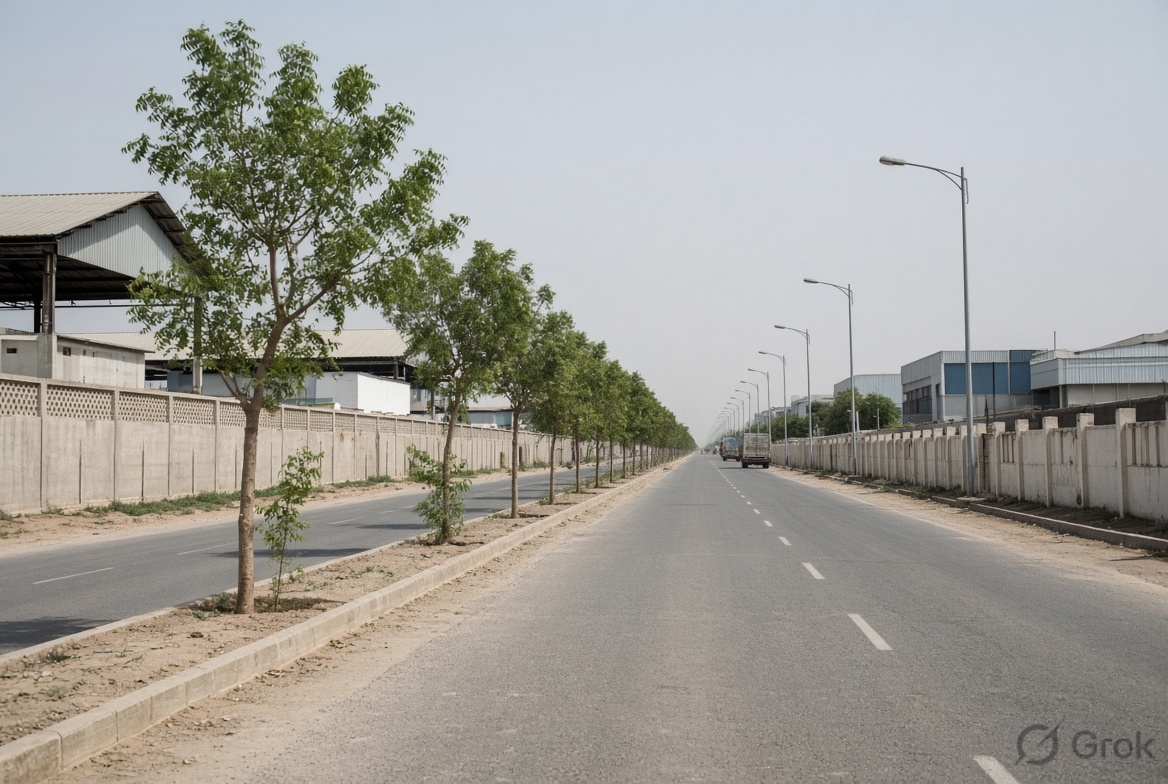
Read the full storyThe foundation of Environment Marg was laid beside the new Neemrana Industries Association works. The road is planned to carry shade, planting and a cleaner approach to the industrial areas, creating a greener public edge along the corridor.
Japanese plants in the zone already maintain trees and careful water use inside their boundaries. Those established practices can shape the street outside the gates. A planted Environment Marg lowers surface heat, improves the daily walk for workers and visitors heading to the factories, and presents a corridor that tends its ground with the same attention the plants give their own sites.
This is the first visible step toward a cooler, greener industrial town. It links the civic infrastructure inaugurated with the NIA building to the environmental care already practised by the Japanese Zone companies. As the planted street takes shape, it reinforces Neemrana’s identity as a place where manufacturing growth and thoughtful ground-level care advance together.