
Briston: A New Green Social Address for Neemrana
Read the full story
Briston: A New Green Social Address for Neemrana
Read the full storyBriston is proposed as more than a place to eat or meet. It is envisioned as a green, everyday social destination for Neemrana’s growing community of factory professionals, visiting investors, Japanese and Korean residents, local families, entrepreneurs and young talent.
The experience would begin outdoors. A landscaped frontage park, dense Miyawaki-style planting, native shade trees, walking paths and informal seating pockets could create a softer, more welcoming arrival than a conventional commercial complex. The proposed lake-edge setting would add a sense of pause: a place for an evening walk, a business conversation or a family outing after the workday.
Inside, Briston’s planned architecture can carry the same idea forward. Shaded courts, daylight-led spaces, breathable landscape corridors and lower-heat materials would help create a comfortable environment suited to Neemrana’s climate. Rather than separating hospitality from the landscape, the project can bring both together—using greenery, shade and open space as part of how people gather.
Its sustainability vision is equally important. Proposed filtration, water reuse and responsible landscape systems can position Briston as a small but visible example of water-conscious development. Treated water for landscaping, rainwater capture and efficient planting can help ensure that green space is designed with long-term resource responsibility in mind.
Food would remain an important part of the destination, but not its only identity. Proposed concepts such as Haru, My Asiana and other dining formats could offer Japanese, Korean, Indian and international communities a shared social setting. A meal becomes the beginning of a conversation between professionals, families, suppliers, entrepreneurs and visitors.
A successful industrial town needs places beyond factory gates-spaces where people can relax, build relationships, celebrate milestones and feel connected to the place where they work and live.
If delivered as envisioned, Briston can become a new social landmark for Neemrana: green, welcoming, internationally minded and designed for everyday life.
Japan’s next Rajasthan chapter begins in Neemrana and Ghiloth
Read the full story
Japan’s next Rajasthan chapter begins in Neemrana and Ghiloth
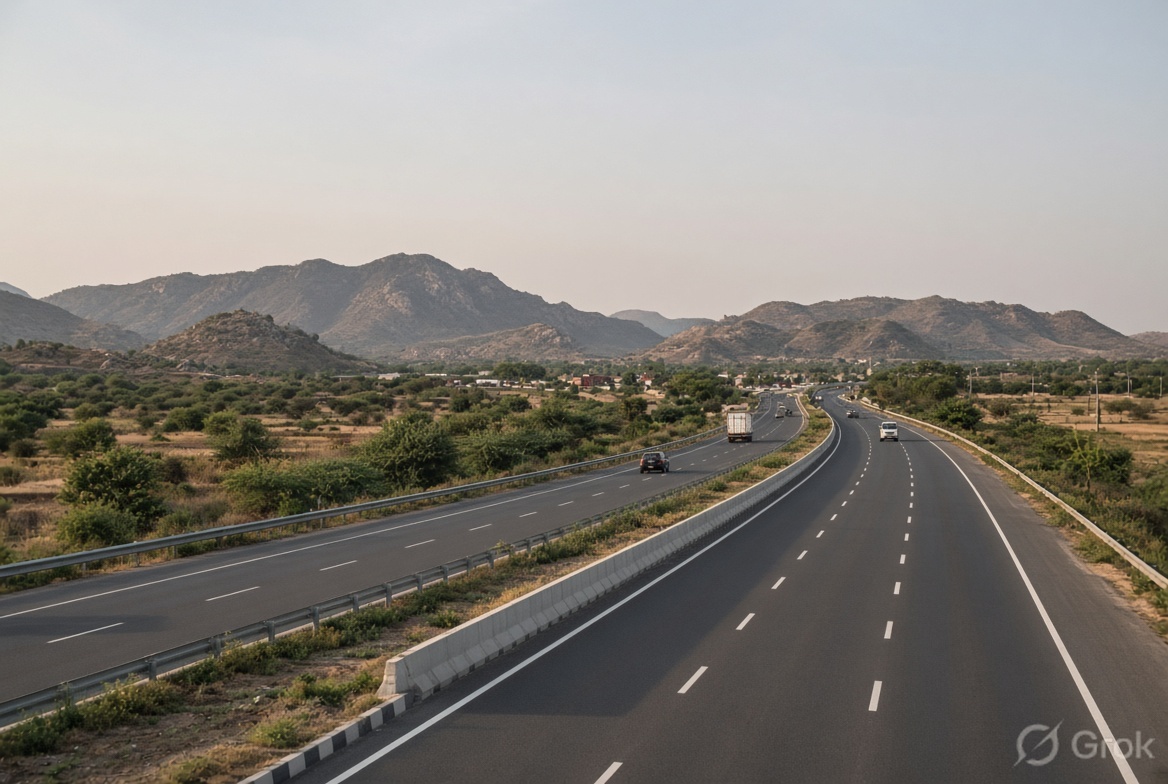
Read the full storyNeemrana’s Japanese manufacturing story is no longer an experiment. It is one of India’s most visible examples of how a focused industrial partnership can create an entire economic ecosystem like factories, skilled employment, suppliers, technical learning and confidence for the next investor.
The foundation was laid in 2006, when RIICO and JETRO created a dedicated Japanese industrial zone in Neemrana. Today, the operating base is substantial. RIICO’s 2026 public snapshot cites more than 50 Japanese companies, over Rs.8,500 crore in investment catalysed and more than 29,000 employment opportunities in the Neemrana-Ghiloth belt. Earlier RIICO figures in May 2025 placed the zone’s cumulative investment at about ₹6,5000 crore and jobs at roughly 26,000, showing the continuing growth of the manufacturing ecosystem.
In dollar terms, ₹8,500 crore is approximately This is not the annual turnover of the companies, Their combined business footprint is larger than any one investment number because factories in the corridor manufacture air conditioners, electric motors, automotive safety systems, braking components, precision engineered products, polymers, metal products and other industrial inputs that move through supply chains across India and export markets. The true aggregate turnover of all Japanese companies in the SNB–DMIC belt is not publicly disclosed as a single verified figure and should not be estimated without company filings. Overall, the DMIC Delhi Mumbai Industrial Corridor investment base is pegged at $90Billion.
To give you a glimpse of few industries. Neemrana is the mature anchor. Its 1,166-acre Japanese Zone has reached high occupancy and created a base of experienced workers, Japanese-trained managers, local suppliers and industrial services. Daikin, Nidec, Tokai Rika Minda, Nissin Brake, Toyoda Gosei, Mikuni and other companies have helped turn the area from a highway location into an engineering and manufacturing community.
Ghiloth is the next chapter. RIICO identifies it as a Japanese investment zone within the wider DMIC geography, around seven kilometres from NH-48 and close to the Kathuwas multimodal logistics park. It gives the corridor room for new factories, Tier-2 and Tier-3 suppliers, warehousing and future technology-led manufacturing.
The next signal is already visible. Eleven Japanese-company MoUs, reported at Rs.1,3380 crore across Neemrana, Ghiloth and Pali, are expected to create about 2,300 jobs. These are commitments, not completed plants—but they show that Japan’s Rajasthan story still has momentum.
The SNB corridor combines an established Japanese industrial culture with space to grow, a large workforce, Delhi–Mumbai connectivity and a proven habit of turning global manufacturing into local opportunity.

Water for Growth: Neemrana’s Rs.1,012-Crore Utility Leap
Read the full story
Water for Growth: Neemrana’s Rs.1,012-Crore Utility Leap
Read the full storyNeemrana’s next development story may be written not only in factories, highways and industrial plots, but in water. Reported plans for a Rs.1,012-crore industrial reservoir-and-feeder system signal an ambitious effort to build the utility backbone required for the next stage of growth across the Neemrana–SNB corridor.
For an industrial destination, reliable water is more than a basic service. It enables a factory to plan production with confidence, supports worker housing and neighbourhoods, strengthens hotels and hospitals, and gives new investors assurance that growth will be accompanied by essential infrastructure. A large, planned water system can therefore become the common foundation beneath manufacturing, township development, logistics and social facilities.
A huge reservoir-and-feeder network to create a corridor-wide approach: storing water, moving it through planned distribution systems and connecting industrial areas with the capacity needed for expansion. Neemrana’s established manufacturing base, its Japanese industrial ecosystem and the future development potential around Ghiloth and the wider SNB region all stand to benefit from infrastructure designed for long-term growth.
The opportunity is also to make Neemrana a model of water-smart industrialisation. Modern factories increasingly reduce freshwater dependence through treated-water reuse, rainwater harvesting, recycling systems and efficient processes. New industrial buildings can capture roof runoff; landscaped campuses can use treated water; and common systems can support responsible water management at a wider scale. The result is not simply more supply, but better use of every available drop.
This is where infrastructure becomes investment confidence. A company looking at Neemrana does not see only land. It sees whether roads connect to markets, whether power supports production, whether workers can live nearby and whether water systems are built for growth. The proposed Rs.1012-crore water investment addresses one of the most important parts of that decision.
It creates opportunities beyond large industry. Water infrastructure generates demand for engineering contractors, pipe and pump suppliers, treatment-technology firms, maintenance teams, digital monitoring systems, landscape specialists and skilled technicians. Local entrepreneurs and MSMEs can participate in the development of the services economy around this new utility network.
Neemrana has already shown that industrial planning can attract global manufacturers. The next chapter is to ensure that the physical systems supporting those factories grow with equal ambition. If implemented as reported, the reservoir-and-feeder initiative can help make Neemrana not just a successful industrial location, but a more resilient, better-serviced and future-ready manufacturing city.

Renewable Power and the Neemrana-II Opportunity
Read the full story
Renewable Power and the Neemrana-II Opportunity
Read the full storyNeemrana is becoming more than a manufacturing address, it is emerging as an important node in northern India’s clean-energy infrastructure. The Neemrana-II–Kotputli Transmission project is designed to strengthen the regional grid, move renewable electricity from Rajasthan’s generation zones and reinforce the power environment around the Delhi–Jaipur industrial corridor.
At the centre of the project is a 6,000 MVA, 765/400 kV substation at Neemrana, alongside approximately 250 km of 400 kV transmission lines linking Neemrana-II with Kotputli and the Gurgaon–Sohna network. The project is intended to enable part of the flow of up to 7.7 GW of renewable power, especially from Rajasthan’s renewable-energy zones.
This is a major confidence signal. Modern manufacturing depends on reliable, high-quality electricity, production lines, precision machines, cold chains, automation, warehouses, data systems and worker-township services all perform better in a strong grid environment. The project does not mean that a specific Neemrana factory will automatically receive renewable power from this system, but it strengthens the wider transmission architecture on which industry depends.
The real opportunity is future readiness. As Japanese, Korean, Indian and global manufacturers increasingly set targets for cleaner energy use, Neemrana can position itself as a location where factories have proximity to a high-capacity power network and greater potential to explore renewable-power procurement, rooftop solar, open-access arrangements where eligible and energy-efficiency investments.
A stronger grid also makes new kinds of businesses more possible. Solar developers, electrical-equipment suppliers, energy auditors, battery-storage companies, EV-charging operators, smart-metering firms and energy-management service providers can find opportunity in an industrial region preparing for cleaner and more sophisticated power use.
The project is reported to be targeted for commissioning by March 2027. Its completion would establish Neemrana-II as a high-capacity grid node connecting Rajasthan’s renewable-energy resources with demand centres in Haryana and beyond. That connection is significant: it turns Neemrana into a place not only where products are made, but where India’s manufacturing growth and renewable-energy transition meet.
The message is powerful. Neemrana already offers an established industrial base, Japanese manufacturing experience, NH-48 connectivity and access to the wider DMIC geography. A stronger clean-energy transmission backbone adds another reason to look at the corridor, not just for today’s factory, but for tomorrow’s low-carbon, energy-smart industrial expansion.

Power Beneath Progress: Neemrana Builds a Stronger Energy-Smart Industrial Power Grid
Read the full story
Power Beneath Progress: Neemrana Builds a Stronger Energy-Smart Industrial Power Grid
Read the full storyNeemrana’s industrial rise is powered not only by major factories and investment announcements, but by the infrastructure working quietly behind every production line. The proposed Rs.319.14-lakh upgrade of power-line infrastructure at Neemrana-II represents an important step in strengthening the everyday reliability that manufacturers need to operate, expand and plan confidently.
To a modern industrial area, electricity is the foundation of productivity. It runs machinery, assembly lines, testing equipment, automation systems, warehouses, offices, cold storage, worker facilities and digital operations. When power infrastructure is upgraded in a planned manner, it supports smoother production, reduces operational uncertainty and gives incoming investors greater confidence in the location.
The Neemrana-II works underline a larger point. Industrial development is not sustained by land allotments alone. It depends on a coordinated network of substations, distribution lines, transformers, feeders, safety systems and regular maintenance. These may not be visible in a factory photograph, but they determine whether a manufacturing ecosystem can perform at international standards every day.
Neemrana’s industrial community has also expressed aspirations for stronger 132 kV capability, underground power lines and improved civic infrastructure. These ideas reflect the corridor’s next-stage ambition. Underground systems can improve the visual environment and reduce exposure to weather-related disruptions, while higher-capacity infrastructure can support a growing mix of precision engineering, automotive components, electronics, logistics and technology-enabled services.
The broader opportunity is to build an energy-smart industrial district. New factories can combine dependable grid supply with rooftop solar, efficient motors, energy monitoring, power-quality systems and lower-energy building designs. This can make the Neemrana-SNB corridor more competitive for companies that measure not only the cost of electricity, but also reliability, sustainability and long-term operational efficiency.
Grid modernisation creates its own ecosystem of opportunity. Electrical contractors, cable and equipment suppliers, maintenance providers, automation specialists, solar installers, safety auditors and trained technicians all become part of the industrial growth story.
Reliable electricity may be invisible when it works well, but it is central to every successful manufacturing destination. Neemrana’s investment in stronger power infrastructure shows a corridor preparing not only to attract factories, but to help them operate with confidence, quality and continuity.