
Nidec’s Third Neemrana Plant: A Japanese Motor Maker’s Next Bet on India
Third plant (~JPY 10bn) tracks to Sep 2026 completion.
Read the full story
Nidec’s Third Neemrana Plant: A Japanese Motor Maker’s Next Bet on India
Third plant (~JPY 10bn) tracks to Sep 2026 completion.
Read the full storyNidec’s Rs.450-crore third factory building in Neemrana is designed to deepen the town’s role in India’s automotive-electrification supply chain. The Japanese group already makes air-conditioner motors and electric two-wheeler drive motors in Neemrana; the new building is planned for advanced automotive motors, actuators and pumps.
Nidec had named September 2026 as the planned construction-completion date, as confirmation of trial production, commercial operations, first customer supplies and current hiring.
From Kyoto to Neemrana
Nidec Corporation was founded in Kyoto in 1973 by Shigenobu Nagamori and Hiroshi Kobe. It began as a small precision-motor maker and grew into a worldwide manufacturer of motors and motion systems used in electronics, automobiles, appliances, industrial equipment and machinery.
The group describes its product universe as 'everything that spins and moves': from miniature precision motors to large industrial motors, automotive systems, electronic components and machinery. It has approximately 300 group companies globally.
Nidec reported consolidated sales of Japanese Yen 2.607 trillion for the year ended 31 March 2025 and 104,285 consolidated employees. Its stated focus includes automotive motors, electric-power-steering systems, electric water pumps, electric oil pumps and related components for vehicle electrification.
The Promoters
Nidec India Private Limited is a subsidiary of Japan’s Nidec Corporation, not a locally promoted standalone Indian company. Its strategic direction, technology, capital and global customer relationships therefore come from the Kyoto-headquartered Nidec group.
Shigenobu Nagamori founded Nidec in 1973 and served for decades as its principal leader; the company’s official biography identifies him as founder and chairman of the board. However, Nidec later said that Nagamori resigned as chairman emeritus in February 2026 amid an investigation related to alleged accounting improprieties at a Chinese subsidiary.
For the Neemrana project, the important current corporate contact is Nidec India Private Limited and its parent company’s automotive and appliance-commercial-industrial motors businesses. Nidec’s FY2025 reporting says automotive operations are being integrated with its Appliance, Commercial and Industrial Motors business to combine procurement, production, logistics and human-resources capabilities.
Neemrana’s Three Buildings
Nidec began Neemrana operations in 2016, building its position in the Japanese Industrial Zone over three factory buildings.
First building Motors for air conditioners Connects Neemrana to India’s rapidly growing cooling and HVAC manufacturing ecosystem.
Second building Drive motors for electric bikes Places Neemrana in the electric two-wheeler and small-mobility supply chain.
Third building Motors for electronic power steering; park-lock actuators; electric water pumps and related automotive products Moves Neemrana into higher-value automotive electrification, safety and vehicle-control components.
The third building was announced after a groundbreaking ceremony on 19 May 2025. Nidec said it was being added to its existing Neemrana manufacturing site, rather than developed as a separate new industrial location.
Nidec’s third building shifts the Neemrana conversation from traditional manufacturing to vehicle systems that make cars more efficient, electronically controlled and electrified. The products are not consumer-facing, but they sit inside critical vehicle functions: steering, cooling, lubrication, parking and thermal management.
The project can also generate a broader supplier opportunity around metal stamping, die casting, plastic moulding, copper components, magnets, precision machining, bearings, wiring harnesses, electronic controls, testing, packaging, logistics, calibration and maintenance. None of these supplier contracts have been announced, but they are the areas Neemrana’s MSMEs, ITIs and industrial-service firms should watch.

Budweiser, Corona and Hoegaarden Beer Are Manufactured in Neemrana Brewery: From a Rs.200 - Crore Plant to a New Industrial Supply Chain
Supplementary DPR and funding under Rajasthan review.
Read the full story
Budweiser, Corona and Hoegaarden Beer Are Manufactured in Neemrana Brewery: From a Rs.200 - Crore Plant to a New Industrial Supply Chain
Supplementary DPR and funding under Rajasthan review.
Read the full storyA new kind of factory has joined Neemrana’s industrial landscape. The town is widely known for Japanese automotive, electronics, air-conditioning and engineering companies. But AB InBev India’s new brewery brings a large global consumer-manufacturing business into the corridor-one that links Neemrana to bars, restaurants, retail shelves and distribution networks across North and Central India.
The company says it has invested about Rs.200 crore in the Neemrana facility, operated through Rochees Breweries Limited, and that production began in July 2026. The plant is intended to serve Rajasthan, Uttar Pradesh, Madhya Pradesh, Jharkhand and other markets.
The factory is an operating manufacturing facility.
AB InBev India is part of the global brewing group Anheuser-Busch InBev, widely known as AB InBev. The group’s Indian portfolio includes internationally known beer brands such as Budweiser, Corona and Hoegaarden.
The parent group is headquartered in Leuven, Belgium, and has roots in the combination of major brewing businesses including Belgium’s Interbrew, Brazil’s Ambev and the United States’ Anheuser-Busch. It is one of the world’s largest beer companies, selling brands in markets across the world.

Hitachi in Neemrana: The Japanese Auto-Component Link That Can Grow With India’s Mobility Market
51 companies (Embassy/JETRO, Oct 2024) — a voluntary survey.
Read the full story
Hitachi in Neemrana: The Japanese Auto-Component Link That Can Grow With India’s Mobility Market
51 companies (Embassy/JETRO, Oct 2024) — a voluntary survey.
Read the full storyHitachi is already part of Neemrana’s Japanese manufacturing story through Hitachi Astemo Rajasthan Brake Systems Private Limited, a vehicle-braking and auto-component operation in the Japanese Zone at Majrakath.
Hitachi Energy has announced a separate Rs,2,000-crore large-power-transformer factory at Karjan in Vadodara, Gujarat.
Hitachi Astemo is part of the wider Hitachi group’s automotive technology business. “Astemo” combines Advanced Sustainable Technologies for Mobility, reflecting its focus on vehicle systems including braking, powertrain, electrification, suspension and motorcycle technologies.
The Neemrana operation has roots in the Nissin Brake India business and now operates under the Hitachi Astemo identity. Its listed location is SP-1-34-35, Phase III, New Industrial Japanese Zone, Majrakath, Neemrana.

Korea Zone Comes Alive: Neemrana Is Ready for Its Next Manufacturing Partnership
An honest empty.
Read the full story
Korea Zone Comes Alive: Neemrana Is Ready for Its Next Manufacturing Partnership
An honest empty.
Read the full storyFor years, Neemrana has been known as Rajasthan’s Japanese industrial gateway. Now, Ghiloth’s Korea Zone can become the next chapter in the SNB corridor’s international manufacturing story.
The message for Korean companies is simple: the zone exists, the industrial corridor is active, MoUs are creating momentum, and Neemrana is ready to welcome factories in mobility, electronics, energy, materials, appliances and advanced manufacturing.
The first Korean factories will not arrive in isolation. They can plug into an already active industrial landscape. Japanese manufacturers, automotive suppliers, HVAC producers, engineering companies, logistics providers, industrial housing, hotels and access to markets across Delhi–NCR and North India.
An MoU is the beginning of an investment journey, not its final achievement. The Korea Zone should now follow every investor through a clear sequence.
Confirm the company’s product, investment, land need and employment plan
Identify and allot the appropriate RIICO plot
Confirm power, water, road, drainage and environmental-clearance requirements
Support building approvals and construction commencement
Connect the company with local suppliers, logistics partners and service providers
Create a local recruitment and apprenticeship plan before production begins
Track trial production, commercial operations and actual jobs created
That process will turn investment interest into visible industrial growth.
What Korea Can Build
Korean manufacturers can find strong opportunities in the SNB corridor across sectors that fit Neemrana’s existing industrial base.
Sector Potential factory opportunity in Korea Zone
Electric mobility EV chargers, battery-management systems, motors, power electronics, wiring harnesses and electronics, Automotive components Braking systems, sensors, lighting, safety systems, precision stampings and plastics
Energy Solar equipment, industrial energy systems, energy storage, inverters and grid components
Electronics Appliance components, controls, displays, sensors, industrial automation and electronics assembly
Materials Coated steel, specialty chemicals, engineering plastics, advanced packaging and battery materials
Machinery Factory automation, robotics components, industrial tools and equipment
Healthcare technology Diagnostics, medical devices, industrial clinics and hospital equipment
These sectors can create not only large-factory jobs but also opportunities for local MSMEs in fabrication, packaging, warehousing, maintenance, food services, transport, security, facility management and technical staffing.
Invest Neemrana is the corridor’s Korean investment bridge. Its work should not end with promoting land or publishing news. It offers Korean companies a practical market-entry platform.

Emerald Valley Apprentice Centre: Learning That Leads to Work
A proponent's vision — read against what the corridor actually has.
Read the full story
Emerald Valley Apprentice Centre: Learning That Leads to Work
A proponent's vision — read against what the corridor actually has.
Read the full storyThe next generation in Neemrana should not have to leave home just to become employable. The proposed Emerald Valley Apprentice Centre can create a new model of job-linked learning, where young people learn by solving real industrial, technology and community problems, then move directly into apprenticeships, employment and enterprise.
Neemrana already has factories, global companies, industrial suppliers and a growing ecosystem of Japanese, Korean and Indian manufacturing. What is needed is a stronger bridge between a young person’s education and the first real job. The Apprentice Centre can become that bridge.
It would not operate like a conventional college where students study first and search for work later. It would be built around one promise: every learner should leave with practical capability, an industry project, a work portfolio and a defined route to employment.
Learning Through Real Work
At the Emerald Valley Apprentice Centre, students would learn through live assignments from industry and the township.
A factory may need help reducing energy use, improving workplace safety, tracking spare parts, reducing packaging waste, monitoring water consumption or improving worker transport. A hotel may need better booking systems. A residential community may need a waste-segregation plan. A local business may need digital marketing, accounting support or e-commerce tools.
These are not classroom exercises. They are real problems.
Students would work in teams with mentors from factories, technology companies, universities and local enterprises. Each completed project would become part of the student’s professional portfolio.
A young person graduating from the programme should be able to say:
> “I have worked on a real problem. I understand the workplace. I can show what I have built, improved or repaired.”
That is more powerful than a certificate alone.
## The Apprentice Centre Model
The proposed centre can organise training around four connected pathways:
Advanced manufacturing | Machines, quality systems, maintenance, automation, robotics, safety and production planning | Green technology | Solar systems, cooling efficiency, water reuse, waste recovery, EV systems and environmental monitoring | Clean-energy firms, factories, utilities, sustainability teams and startups |
| Digital industry | AI tools, data analysis, coding, cybersecurity, sensors, IoT, design and digital operations | Technology teams, GCCs, industrial software firms and local enterprises |
| Services and township economy | Hospitality, food services, transport, customer care, security, facility management and retail | Hotels, residences, logistics, hospitals, restaurants and township services |
The programme should combine classroom basics with workshops, labs, simulation rooms, factory visits, paid apprenticeships and supervised projects.
Job Training Facilities
The Emerald Valley Apprentice Centre can include practical training facilities that mirror the workplace young people are preparing to enter:
- Advanced manufacturing workshop with CNC, assembly, electrical, pneumatics, hydraulics and basic robotics
- Industrial maintenance lab for motors, pumps, compressors, sensors, troubleshooting and preventive maintenance
- Quality and measurement lab for 5S, Kaizen, inspection, calibration, documentation and process control
- Cooling, HVAC and energy-efficiency lab for heat exchangers, refrigeration systems, building cooling and industrial energy management
- Electric mobility lab for EV components, battery safety, charging systems and electronics
- Water and circular-economy lab for treatment, reuse, rainwater harvesting, waste segregation and recycling systems
- Digital fabrication and design studio with CAD, 3D printing, rapid prototyping and product design
- AI, IoT and industrial-data centre for sensors, dashboards, automation and predictive maintenance
- Hospitality and service academy for food safety, guest relations, housekeeping, front-office operations and corporate concierge services
- Language and communication centre for English, Hindi, Japanese and Korean workplace communication
- Entrepreneurship studio where young people can build service businesses, supplier firms and technology ventures
The point is not to fill rooms with equipment. Every lab should be connected to a real employer requirement and a job pathway.
The Employment Promise
The Centre can aim for 100 percent employability and 100 percent placement support, but the promise must be made responsibly.
Employable should mean that every student completes industry-tested skills, safety training, communication training, a real project and an apprenticeship or workplace exposure. “Employed” should mean that the Centre works with employers to create verified job offers, apprenticeships, self-employment opportunities or supported enterprise pathways before a student completes the programme.
This requires a formal employment system:
- Industry partners identify roles and skill requirements before each batch begins
- Each student is assessed against job-specific standards, not only written exams
- Every student completes at least one real workplace project
- Employers interview students during the programme, not only after graduation
- Paid apprenticeships become the normal route into full-time roles
- The Centre publishes placement data: number trained, number interviewed, number placed, salary range, retention after six and twelve months
- Students who want to start enterprises receive supplier registration, bookkeeping, compliance and buyer-introduction support
- Young women, rural students and first-generation learners receive transport, hostel, language and mentoring support so opportunity is genuinely accessible
Apprenticeship Before Employment
The Centre can build a 'learn, earn and grow' model.
A student may spend the first months learning workplace discipline, safety, communication, digital tools and technical basics. The next stage can be an industry project. Then comes a paid apprenticeship with a factory, service company, hotel, logistics operator, technology firm or clean-energy enterprise.
Employers benefit because they meet trainees before making permanent hiring decisions. Students benefit because they earn, gain confidence and understand the rhythm of professional life. Families benefit because education becomes connected to livelihood rather than an uncertain wait after graduation.
A Centre for the Whole Corridor
The Apprentice Centre should serve more than large factories. It can support the entire Neemrana–Behror–SNB corridor.
A small fabrication firm may need a trained welder. A hotel may need a front-office executive. A housing community may need a facility manager. A solar company may need installers. A food business may need trained kitchen workers. A startup may need a CAD designer. A local school may need a robotics mentor.
Emerald Valley can become the place where these needs meet capable young people.
It can also create a shared talent platform where employers post apprenticeships, projects and vacancies, while students display skills, portfolios, certifications and project outcomes.
Young people should not see themselves only as job seekers waiting outside a factory gate. They should see themselves as technicians, designers, builders, service professionals, engineers, entrepreneurs and problem-solvers.
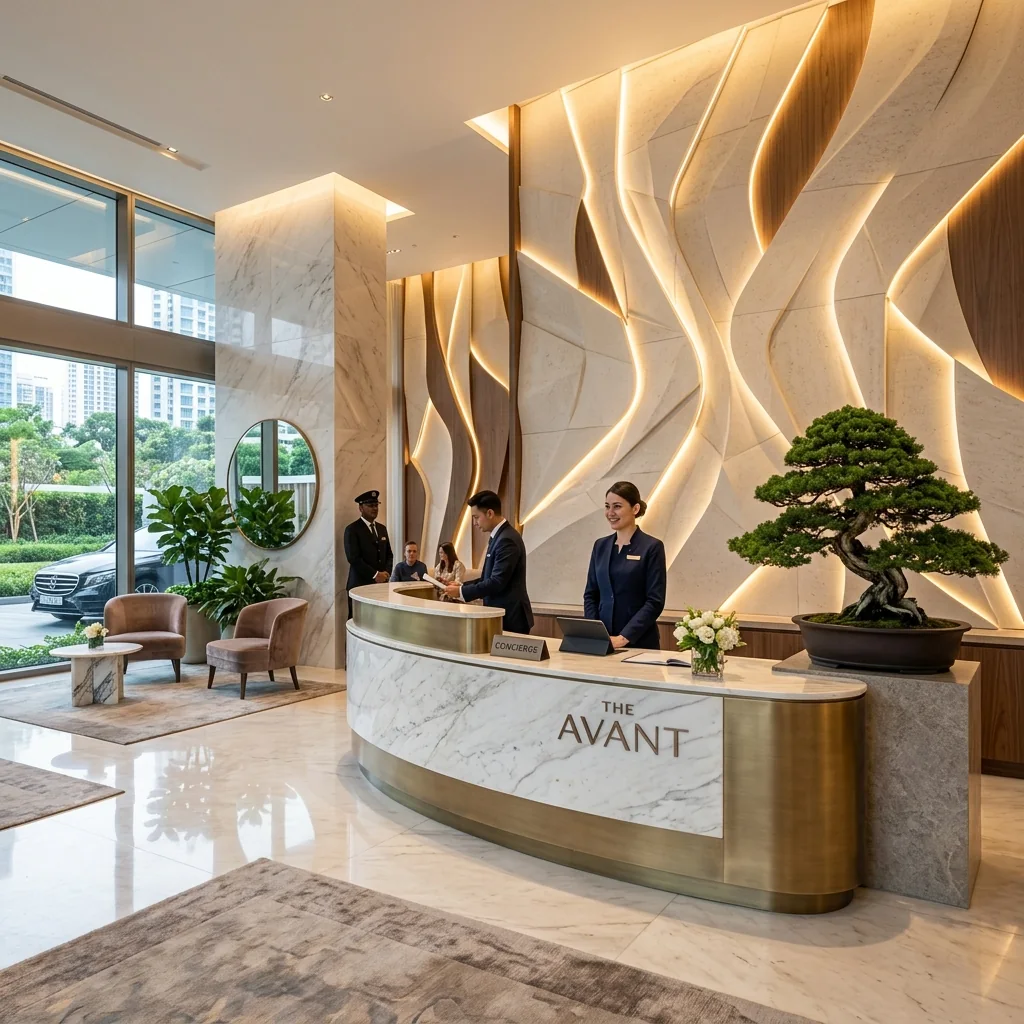
Briston Concierge Desk: Making Neemrana Easier to Arrive In
Real water/mobility item, separate from the pitch.
Read the full story
Briston Concierge Desk: Making Neemrana Easier to Arrive In
Real water/mobility item, separate from the pitch.
Read the full storyA Japanese-inspired home needs more than thoughtful design. It needs a Japanese-quality arrival experience become clear, reliable, secure and considerate from the moment a manager, engineer or family lands in India.
Neemrana has grown into an important international manufacturing location. Japanese and Korean companies have built factories, supplier relationships and long-term teams here. Yet a practical question remains for every company sending a new employee: who meets them at the airport, helps them settle in, explains the town, arranges safe transport and makes the first week in a new place less uncertain?
Briston’s "Concierge Desk" could answer that question.
It is to create a 'Neemrana Corporate Arrival Service' for Japanese, Korean and Indian companies bringing managers, engineers, technical specialists, auditors and families into the corridor.
A new arrival may need airport pickup, a comfortable temporary stay, a SIM card, food guidance, a medical contact, local transport, help finding a school, household-support verification and a simple explanation of the nearest factory, market, hospital and bank. A family arriving from Tokyo, Seoul, Osaka, Pune or Bengaluru should not have to discover all this alone through scattered phone calls and informal recommendations.
The Arrival Desk
The proposed Briston Concierge Desk could become a single first contact for companies and residents.
Its role could include:
- Pre-arrival briefing for employees and families
- Secure pickup from Delhi airport, Gurugram, Jaipur and nearby railway stations
- Temporary serviced accommodation during a house search or company onboarding
- Local orientation tours around Neemrana, Japanese Zone, industrial areas, schools, hospitals, markets and recreation spaces
- Assistance with verified domestic help, drivers, cooks, housekeeping and maintenance staff
- Emergency contact cards, hospital guidance and 24-hour escalation support
- Support for basic local requirements such as mobile connections, grocery ordering, transport and household supplies
- Multilingual coordination in English, Hindi, Japanese and Korean, subject to staffing and partner arrangements
- Company billing and centralised booking for HR departments
The service could be useful even to companies that do not lease or buy a residence at Briston. That is important. If designed as a corridor-wide corporate service, it can help Neemrana become easier to work in—not merely easier to market.
A Reliable Mobility Network
Transport is one of the first measures of a well-managed township. A manager arriving for a three-day plant visit should know who will meet them, where they will stay and how they will travel safely between the factory, hotel, residential area and airport.
Briston could develop a managed shuttle and concierge-mobility network connecting Neemrana with:
- Delhi airport and key business districts
- Gurugram corporate offices, hotels and hospitals
- Jaipur airport, railway station and city business locations
- Behror, Bhiwadi, Manesar and the wider industrial corridor
- Local factories, hotels, hospitals, schools and shopping areas
The service could include pre-booked cars, executive vans and shared corporate shuttles, with GPS-enabled tracking, trained drivers, verified vehicles, women’s-safety protocols and a central help desk. For companies, the value is reliability. For residents, it is independence from ad-hoc travel arrangements.
Weekend city tours could add another layer. A family that moves to Neemrana should be able to visit Jaipur’s heritage areas, Delhi’s museums and markets, Gurugram’s restaurants and services, or nearby cultural destinations without having to arrange every journey independently. Carefully curated day trips could help new residents understand the region beyond the factory gate.
Japanese Living, Locally Delivered
A genuine Japanese living ecosystem is not created by a Japanese name alone. It is created by the small conveniences that allow a family to live comfortably, confidently and with dignity.
Within or alongside a future Briston community, the proposition could include:
- A Japanese and Korean grocery corner with familiar pantry essentials, sauces, snacks, rice, noodles, teas and household products
- Japanese and Korean dining options, including simple everyday meals rather than only occasional fine dining
- Delivery partnerships for Japanese groceries, meals and specialty products
- A café or community lounge where residents, visiting engineers and local professionals can meet
- Language-support sessions for residents, domestic staff, drivers, security teams and local service providers
- Japanese and Korean television, library, children’s activity and community-information facilities
- Wellness services, walking areas, fitness programmes and quiet common spaces
- A family-support directory covering doctors, dentists, pharmacies, schools, tutors, child care and emergency services
- Support for festivals, food events, film screenings, art workshops and India–Japan–Korea community gatherings
The important test is whether these services are genuinely useful on an ordinary Tuesday evening-not merely attractive in a brochure.
Security With Hospitality
Security is essential for corporate residents, especially for families and visiting technical teams. But a good residential ecosystem should make security reassuring rather than restrictive.
A proposed Briston service model could include trained gate teams, visitor management, monitored entry points, emergency-response contacts, well-lit walkways, women-friendly mobility arrangements, fire and medical protocols, and clear coordination with local police and hospitals.
For Japanese and Korean corporate clients, security also means predictability: drivers arrive on time, visitor records are maintained, emergency contacts work, household workers are verified and residents know whom to call when something goes wrong.
That combination of hospitality and disciplined service is what could distinguish a true corporate living ecosystem from a conventional apartment complex.
A Service That Helps Neemrana
The bigger opportunity is for Briston to help make Neemrana a more complete international township.
Factories have already brought global manufacturing to the corridor. The next step is to make daily life easier for the people who operate those factories: engineers on short assignments, managers relocating with families, Japanese and Korean professionals, Indian executives, suppliers, auditors and trainers.
A well-run Concierge Desk could create local employment for drivers, hospitality staff, translators, security professionals, cooks, housekeepers, facility managers and service entrepreneurs. It could also give hotels, restaurants, medical providers, transport firms and local retailers a more organised corporate market.
The service would send an important message: Neemrana is not only a place to establish a factory. It is a place where global teams can arrive, settle, work and belong.
Editorial note: The Briston Concierge Desk, airport and city shuttle network, Japanese/Korean grocery and dining ecosystem, and related resident-support services are proposed development concepts. .