
From fort to opera house, the Neemrana name reaches the world stage
Third plant (~JPY 10bn) tracks to Sep 2026 completion.
Read the full story
From fort to opera house, the Neemrana name reaches the world stage
Third plant (~JPY 10bn) tracks to Sep 2026 completion.
Read the full storyFew industrial towns have a name that turns up in concert programmes. Neemrana's now does.
This September the Neemrana Music Foundation staged a production that had never been tried before. 'AI Meets Opera: Monsieur Beaucaire' brought a 1919 opera back to the stage with artificial intelligence, live Indian opera singers and a 20-member French orchestra. It played at Kamani Auditorium in New Delhi on 9 September and at the Lotus Temple on 12 and 13 September.
The story behind the opera travels widely. Pulitzer-winning American author Booth Tarkington first wrote Monsieur Beaucaire in 1900. French composer Andre Messager turned it into an English opera in 1919, and it was a success in London and on Broadway. Hollywood later adapted it with Rudolph Valentino, Stan Laurel and Bob Hope. In the Neemrana production, those three stars returned as AI avatars. Cameras captured the live performers' movements in real time, and AI software turned them into projected avatars that shared the stage with the singers.
The collaboration behind it was just as international. French engineer Philippe Engel built the facial capture and avatar projection software, and IIT Delhi students helped implement it as part of their computer graphics work. Designer Rajesh Pratap Singh created costumes with E-ink technology from the NIFT Technical Department, and senior L'Oréal Paris artists did the makeup. Air France was a lead sponsor, and the production was presented with the Embassy of France under the India France Year of Innovation 2026.
"For us, AI is not about replacing the human voice or the live performer," said Aude Priya Wacziarg, the Franco-Indian opera singer who is managing trustee of the foundation. "It is about creating new ways to tell a story and draw audiences into the world of opera."
The foundation has a long history. Francis Wacziarg founded it in 2002 to promote Western classical music and exchange between East and West. In 2018 it launched the Neemrana Music Academy, which is currently the only institution in India that teaches professional opera singing.
For the Neemrana corridor, this matters more than it might first seem. Economists call it soft power, meaning the ability of a place to attract people through its culture, reputation and ideas. Most industrial towns have little of it. Neemrana has a 15th century fort palace and India's largest Japanese industrial cluster. Its name is now also linked to opera, to French partnerships and to the creative use of AI.
That helps investors too. A place associated with culture and innovation is easier to market to global companies, easier to recruit talent to and more appealing for families. The opera also shows a pattern the corridor can follow in other fields, where heritage, technology and international partners combine to create something new.
Neemrana's factories have made the town known in the business world. Its culture is now reaching a wider international audience.

Neemrana's hotels head into their busiest season
Supplementary DPR and funding under Rajasthan review.
Read the full story
Neemrana's hotels head into their busiest season
Supplementary DPR and funding under Rajasthan review.
Read the full storyIn Rajasthan the calendar affects hotel bookings as much as the weather does. The next three months are the busiest of the year, and Neemrana is ready for them.
The season begins with Navratri, which runs from 11 to 19 October and ends with Dussehra on 20 October. Diwali follows on Sunday 8 November, with Dhanteras on 6 November and Bhai Dooj on 11 November. The wedding season then begins. Chaturmas ends on 21 November with Dev Uthani Ekadashi, when marriage ceremonies traditionally resume.
The wedding calendar is where hoteliers should look most closely. Panchang listings show only eleven auspicious wedding dates left in 2026. Four fall in November, on 21, 24, 25 and 26. Seven fall in December, on 2 to 6 and 11 and 12. With so few dates, demand is concentrated. Families across Delhi NCR and Rajasthan will compete for venues, rooms, caterers and decorators on those days. Many will book months in advance, and some will be happy to find good options a short drive from the city.
Neemrana has those options. Travel platforms list 44 hotels in the town, from heritage properties to highway resorts and business hotels. The 15th century Neemrana Fort Palace is one of India's best known heritage wedding settings. Resorts along the Delhi Jaipur highway offer lawns, banquet halls and room blocks for large guest lists. Neemrana is easy to reach from Delhi and Gurugram, which makes it practical for guests who want a destination feel without a flight.
Corporate demand adds to the season. Companies across NCR plan Diwali celebrations, year-end offsites, dealer meets and leadership retreats. Many factories in the corridor hold festive events and host visiting teams before the year closes. These bookings usually fall on weekdays, while weddings and family getaways fill the weekends. Hotels therefore get two kinds of demand in the same months.
Local businesses benefit as well. Caterers, florists, tent and lighting suppliers, photographers, band and dhol groups, makeup artists and transport operators all do well in these months. For a local entrepreneur, a good wedding season can make the year's revenue.
The wider state market is growing alongside. Jaipur alone has more than 40 new hotel properties in the pipeline, many aimed at the destination wedding market. That growth reflects rising demand for wedding and celebration travel across Rajasthan. Neemrana, closer to NCR, is well placed to take a share of it.
The message is clear for hotel owners and investors. With only a handful of wedding dates and a full festive calendar ahead, planning, pricing and partnerships made now will shape what the season brings.
One moon, three stories: Korea, Japan and India share the autumn sky over Neemrana
Corridor freight via the DFC terminal.
Read the full story
One moon, three stories: Korea, Japan and India share the autumn sky over Neemrana
Corridor freight via the DFC terminal.
Read the full storyThis week a full moon rises over the Japanese Zone, and three cultures look up at it for different reasons.
For Korean families in the corridor, it is Chuseok. Korea's great harvest festival falls on the 15th day of the eighth lunar month. In 2026 the main day was Friday 25 September, and the holiday ran from 24 to 26 September. Koreans often call it Korean Thanksgiving. Families traditionally gather to honour their ancestors, visit family graves and share the season's first harvest. The signature dish is songpyeon, small half-moon rice cakes filled with sesame, beans or chestnuts and steamed on pine needles. Families often make them together at the kitchen table.
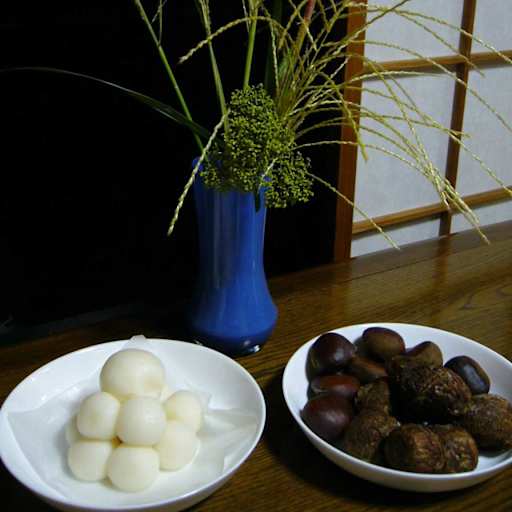
For Japanese families, it is Tsukimi, the custom of moon viewing. Jūgoya, the Mid-Autumn Moon, fell on 25 September this year. The astronomical full moon arrives on 27 September. Homes set out round white tsukimi dango, sprays of susuki grass and seasonal chestnuts and sit quietly to admire the moon. Japanese children grow up seeing a rabbit on the moon's face, pounding rice into mochi.
India sees a hare in the same moon. One of the moon's Sanskrit names is Shashank, "the one who bears the hare". An old Jataka tale tells of a selfless hare whose image was placed on the moon as a reward for its kindness. Standing in Neemrana, a Japanese engineer, a Korean manager and a Rajasthani colleague could look at the same moon and each see the same animal.
India's own autumn full moon comes a month later. Sharad Purnima falls on Sunday 25 October this year. It is widely considered the most beautiful full moon of the year. Families across North India leave kheer out under the moonlight overnight, believing the moon's rays make it nourishing. The night is also celebrated as Kojagara, when Goddess Lakshmi is believed to travel the earth asking who is awake. In the Krishna tradition it is remembered as the night of the Raas Leela. Four days later, on 29 October, women across North India observe Karwa Chauth. They fast through the day and break it only after sighting the moon.
The three traditions have a lot in common. Each thanks the harvest, each brings families together and each makes food a way of bringing good fortune. Each also turns an ordinary night into a shared ritual.
That creates a cultural opportunity for Neemrana. Picture a shared Neemrana Moon Festival next autumn. It could have songpyeon and tsukimi dango next to Rajasthani kheer, Korean folk games, Japanese moon viewing and Indian music at dusk. Factories, residences, hotels and local families could all take part under one sky. For global companies, a town that celebrates its residents' festivals helps them feel at home.
Neemrana represents Asia Festival Calendar. It combines Korean, Japanese and Indian festivals into a single guide for residents, companies, hotels and event partners, and it would support a flagship Neemrana Moon Festival.

Neemrana's sunny days are an untapped rooftop power opportunity
51 companies (Embassy/JETRO, Oct 2024) — a voluntary survey.
Read the full story
Neemrana's sunny days are an untapped rooftop power opportunity
51 companies (Embassy/JETRO, Oct 2024) — a voluntary survey.
Read the full storyThis weekend Neemrana expects a clear sky and about 11 hours of sunshine. That's ordinary weather here, and it's also a lot of free energy falling on the roofs of factories, warehouses, hotels and homes every day.
Rajasthan already leads India in large solar parks. It had 44.37 GW of installed solar capacity at the end of August 2026, the most of any state. It also leads the country under PM-KUSUM, with about 5.2 GW installed across farmland and agricultural feeders. Most of that power comes from big solar farms in the west of the state, not from rooftops.
That's where the opportunity lies. As of March 2026, Rajasthan had about 2,090 MW of rooftop solar. Gujarat had 6,882 MW. Rajasthan gets as much sunshine as Gujarat, so it has plenty of room to catch up.
Rooftop solar is growing fast across India. Distributed solar contributed 16.3 GW, or 36 percent, of the 44.61 GW of solar capacity India added in FY2025-26. Rajasthan is part of that growth. Under PM Surya Ghar Muft Bijli Yojana, the state has installed more than 200,000 rooftop systems with a combined 771 MW of capacity.
The incentives are generous for homes. The central subsidy is ₹30,000 per kW for the first 2 kW and ₹18,000 for the third, up to a maximum of ₹78,000. Eligible Rajasthan households registered under the Chief Minister's Free Electricity Scheme can receive a further ₹17,000 from the state. Housing societies can get ₹18,000 per kW for solar on common facilities, including EV charging points, up to 500 kW.
Rooftops are a way to cut costs for industries. Large industrial consumers in Rajasthan pay about ₹7.50 to ₹9.00 per unit for grid electricity. State rules allow rooftop systems of up to 1 MW per premises under net metering or net billing. Larger users can buy green power through open access. A factory in Neemrana's industrial estates, with a wide flat roof and daytime operations, is an ideal site.
Warehouses have even more roof space and need relatively little power, so they can become small power plants. Hotels can use solar for hot water, cooling and lighting, which lowers operating costs and helps them market themselves to sustainability-minded corporate guests. New residential projects, including homes for Japanese and Korean professionals, can include solar from the start.
The benefits add up. Lower power bills make factories more competitive. Cleaner energy helps suppliers meet the sustainability expectations of global buyers. Installers, electricians and maintenance technicians get steady local work.
Neemrana has the sun, the roofs and the incentives. What it needs now is a clear map of where to start.

This Diwali, give something grown by Indian farmers
Rooms/rates snapshot for visiting teams.
Read the full story
This Diwali, give something grown by Indian farmers
Rooms/rates snapshot for visiting teams.
Read the full storyEvery year the companies of the Neemrana corridor send out thousands of Diwali gifts to employees, suppliers, customers and partners in Japan, Korea and across India. This year a Gurugram food entrepreneur is suggesting those boxes carry something with a story behind it.
Nitin Puri spent more than 25 years in senior roles at ITC, Reliance Retail, MCX and Yes Bank. He studied engineering at NIT Kurukshetra, took his MBA at IRMA Anand and completed an agribusiness programme at Cornell University. He then left corporate life to found KisaanSay, a Hindi name that means "from the farmer". [kisaansay]
"Consumers do not get access to authentic food products they deserve and farmers do not get access to the incomes they deserve," Puri has written. He adds that most farmers still get less than 30 percent of what consumers pay. When Neemrana Signal met him, he said he has dedicated the rest of his working life to building a natural market for Indian farmers.
KisaanSay's model is unusual. It works directly with farmer enterprises under a co-brand and co-profit partnership, and farmers receive 50 percent of the business's profits after supply chain and distribution costs. It partners with 25 farmer enterprises representing about 50,000 farmers across nine states. It sells more than 100 products in 12 categories. Every product is single origin and packed where it is grown. Investors have backed the idea. In April 2026 KisaanSay raised ₹34 crore in a Series A round led by NABVENTURES, the venture arm of NABARD.
The range reads like a map of Indian farming. It includes Gorakhpur Kalanamak rice, Koraput Kalajeera rice, Maharashtra Khapli atta, Chambal A2 desi cow ghee from bilona churning, Idukki cardamom, saffron, honey, jaggery and Rajasthani achaars. It also offers Rajasthani wood-pressed kachi ghani black mustard oil, which comes from the state Neemrana calls home.
For Diwali, Puri has put together an idea for Neemrana companies. It is a gift box of Indian dry fruits and nuts. At its centre are Kashmiri Mamra almonds and Kashmiri walnuts. The company says Mamra almonds carry about 50 percent more oil than imported almonds and are rich in healthy fats. They are 'naturally imperfect' uneven in colour, size and shape, and prized for their taste. Puri says the box can also include Indian cashews and other native dry fruits, so that every nut in it is grown in India.
This fits the Neemrana corridor well. Japanese and Korean companies here value provenance, quality and craftsmanship. A gift that tells partners where their food was grown, who grew it and how the farmer shares in the profit says something about the company that sends it. It also shows international partners a side of India's farming heritage that is rarely seen.
This Diwali, Neemrana's companies can send gifts that support Indian farmers and show where the food comes from.
Made in India Diwali Gifting Programme for Neemrana. It would offer a curated corporate gifting service featuring KisaanSay dry fruit boxes and regional foods, with custom branding for companies in the SNB corridor.
Disclosure
This is a partner feature. Product claims are as stated by KisaanSay.

The Emerald Valley can give Rajasthan's crafts a digital future
A proponent's vision — read against what the corridor actually has.
Read the full story
The Emerald Valley can give Rajasthan's crafts a digital future
A proponent's vision — read against what the corridor actually has.
Read the full storyRajasthan's artisans have carved stone, printed textiles, glazed pottery and woven rugs for centuries. Their skill has survived while their markets have kept changing. The Emerald Valley vision imagines what happens when those old hands meet new tools.
The Emerald Valley presentation proposes Digital Craft Centres. These would be modern workshops where traditional Rajasthani crafts combine with digital fabrication. Artisans would have access to tools such as 3D printers and laser cutters, so they could make pieces that combine long-established techniques with contemporary design. The centres sit within a wider cultural plan for the city. That plan includes cultural centres for Rajasthani art, music and cuisine, heritage experiences that use AR and VR, and AI-curated cultural itineraries.
Imagine what this could mean for the villages around Neemrana.
A block printer could scan a hand-carved wooden block, test new colourways on screen and send the approved pattern back to her own table to print by hand. A stone carver could use a digital model to plan a complex jali screen and cut the rough form by machine. The fine detail that makes it valuable would still be finished by hand. A potter could 3D print a mould for a new vase shape and still glaze and fire every piece in the traditional way.
In each case the machine takes over the repetitive work, and the artisan keeps the skill and the signature. The designs become easier to scale and to customise, and to sell to buyers who never visit Rajasthan.
Those buyers are already nearby. Japanese and Korean families are settling into new homes in Neemrana, including Briston's Japanese-inspired LDK residences. Japanese design has a long respect for handmade objects, natural materials and quiet imperfection, and so does Rajasthani craft. A hand-printed cotton noren curtain, a carved stone tea tray or a set of hand-thrown cups could suit a Japanese home and still carry Rajasthan's heritage.
Hotels could be buyers too. Rajasthan's hotel pipeline is expanding rapidly, with more than 40 new large hotel developments planned around Jaipur alone. Each one needs lighting, textiles, screens, tiles and art for its lobbies and rooms. A digital craft studio near Neemrana could design and produce custom collections for these hotels, combining local craft with modern specifications.
The economic case is simple. Artisans earn more when they design for markets that pay for originality. Young people from craft families get a reason to keep the tradition alive, because digital tools make it modern and viable. Neemrana, already known for precision manufacturing, would add a new kind of making, which is handmade work made at scale and in step with the market.
The Emerald Valley starts from a simple idea. Rajasthan's crafts can have a future alongside its technology, and technology can help keep them alive.
Emerald Digital Craft Studio would be written for artisan collectives, design schools, hotel groups, interior designers and residential developers interested in co-creating a digital craft studio and product line.

Neemrana Arts: The Emerald Valley and Briston plan winter weekends of art, food and culture
Real water/mobility item, separate from the pitch.
Read the full story
Neemrana Arts: The Emerald Valley and Briston plan winter weekends of art, food and culture
Real water/mobility item, separate from the pitch.
Read the full storyTaking a cue from the Neemrana Music Foundation's AI opera, the two groups plan to bring Rajasthani, Japanese and Korean culture together in Neemrana this winter.
In September, Delhi saw opera that few people expected. The Neemrana Music Foundation staged 'AI Meets Opera: Monsieur Beaucaire' a 1919 opera by André Messager. It played at the Kamani Auditorium on 9 September and at the Lotus Temple on 12–13 September.
A winter of weekends
Taking a cue from the Neemrana Music Foundation, The Emerald Valley and Briston will launch Neemrana Arts this winter. It will be a series of weekend events celebrating the corridor's mix of cultures. The two groups told Neemrana Signal that talks between them are under way and details will be announced soon. The events are planned as scheduled weekends through the winter season.
The concept brings together:
Art. Exhibitions and performances featuring Rajasthani, Japanese and Korean artists and the corridor's own creative talent.
Local craft markets. Block prints, blue pottery, textiles and handmade goods from Neemrana's villages.
Food festivals. Rajasthani thalis alongside Japanese and Korean dishes, cooked by the communities that now call the corridor home.
Community evenings. Shared tables where founders, managers and factory workers sit down together to eat and share their cultures.
Neemrana's factories bring together people from Rajasthan, Haryana, across India, Japan and Korea. They work side by side during the week but rarely meet outside work. Neemrana Arts aims to change that, one weekend and one shared meal at a time.
Why winter, why Neemrana
Neemrana is about two hours from Delhi and Gurugram, and the winter weather suits outdoor evenings. NCR families are looking for weekend breaks with more substance. For the corridor's Japanese and Korean families, the weekends offer a reason to invite friends and a way to feel part of the town. For workers and villagers, they offer a place in the corridor's growing story.
If the AI opera showed what the name Neemrana can mean in Delhi, Neemrana Arts could give the town its own cultural calendar.