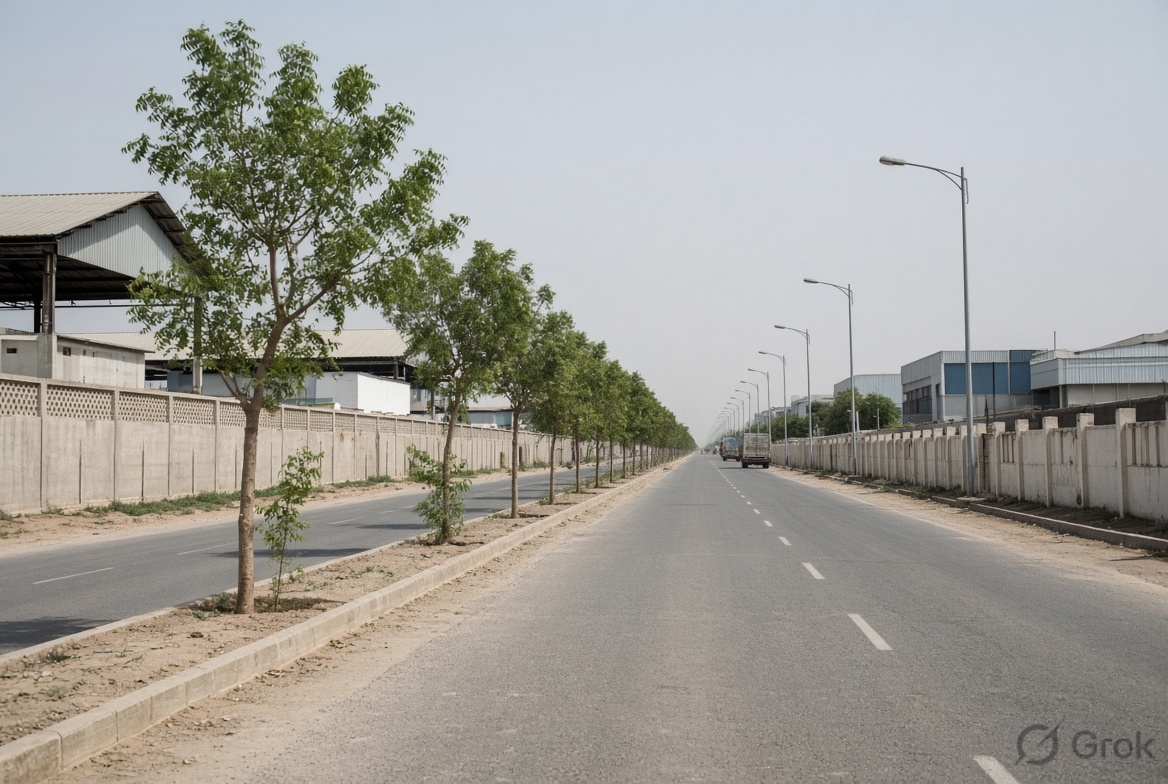
Industrial Revival Becomes A New Route Into Neemrana
Third plant (~JPY 10bn) tracks to Sep 2026 completion.
Read the full story
Industrial Revival Becomes A New Route Into Neemrana
Third plant (~JPY 10bn) tracks to Sep 2026 completion.
Read the full storyNeemrana’s industrial growth story is often told through new land, new factories and fresh investment proposals. Yet another route into the corridor is becoming increasingly important. Existing industrial assets can be renewed, upgraded and returned to fuller productive use through new ownership, new operating structures and patient industrial capital.
Jaipur Capital has reported the acquisition of the manufacturing business and selected assets of Global Ceramics Private Limited in Neemrana through an asset transfer transaction. The reported structure transfers industrial land, a manufacturing facility, plant and machinery and other agreed business assets, with manufacturing operations intended to be carried out through Melozzo Living, a bathroom and home-solutions company.
This is a significant development signal for Neemrana. It demonstrates how an established manufacturing site can become a platform for its next operational phase rather than needing to be replaced by a new greenfield project. Industrial land, production buildings, machinery, utility connections and trained local networks represent accumulated economic capability. When these assets are renewed by new capital and management, they can support continuity, new product development and a wider market strategy.
The local impact can extend well beyond the factory boundary. A manufacturing restart or expansion can reactivate demand for raw materials, packaging, equipment maintenance, transport, security, food services, labour support, quality systems and technical contractors. Local vendors may find new opportunities as operational requirements become clearer. Housing providers, guest houses and corporate-stay operators may also benefit from renewed visits by engineers, managers, suppliers and customers.
The Neemrana and SNB corridor's industrial asset renewal is a useful complement to land-led development. It allows investors and operating companies to assess whether existing sites can be modernised, repurposed or scaled for the next generation of manufacturing. In sectors such as building materials, consumer products, electrical equipment, clean-energy components and industrial services, a functioning factory platform can offer an efficient base for new business activity.
The sustainable-development angle is equally relevant. Extending the productive life of industrial land and built infrastructure can reduce the need for unnecessary duplication. Upgrades in energy efficiency, water management, process controls, material recovery and waste handling can help make renewed factories more resource-conscious as they move into their next phase.
The transaction has been reported as an industrial asset transfer. Further official detail would help clarify the transaction structure, operating timetable, product range, employment plans and supplier requirements. Melozzo Living states that it operates a manufacturing facility in Neemrana, while Jaipur Capital’s reported transaction describes an immediate focus on operational continuity and subsequent capacity development.
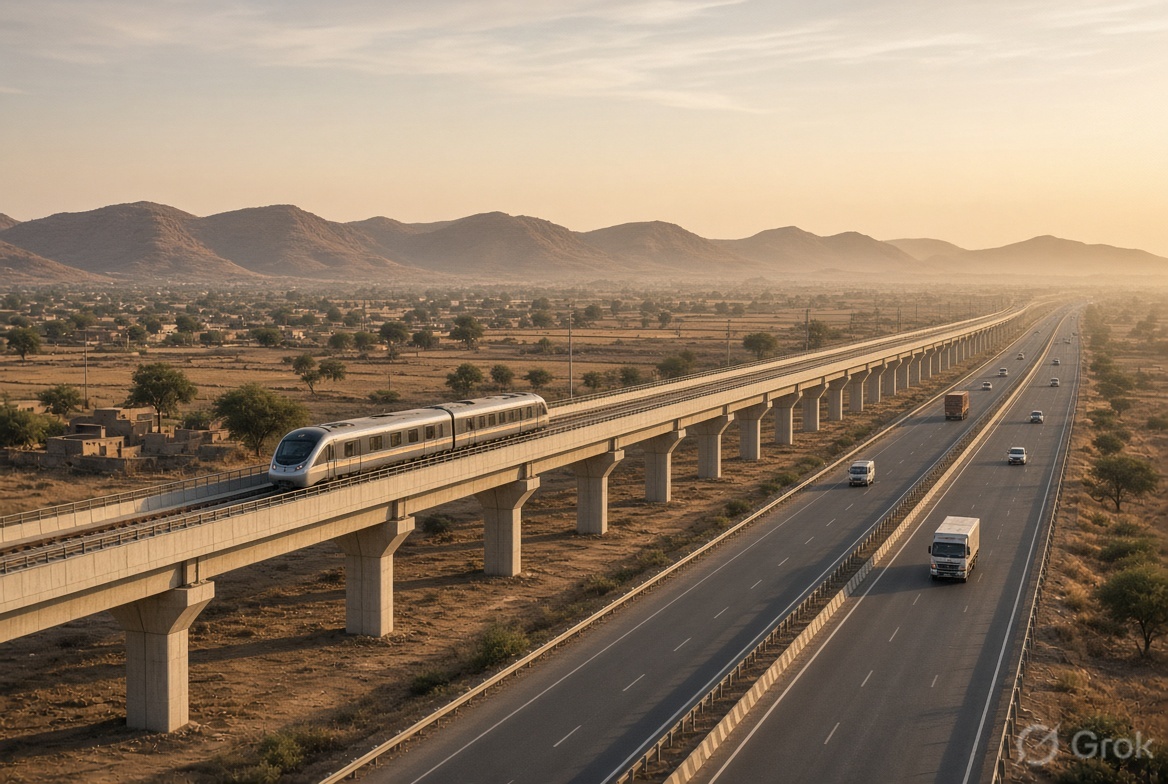
A More Practical Project Clock Can Strengthen Rajasthan's Industrial Pipeline
Supplementary DPR and funding under Rajasthan review.
Read the full story
A More Practical Project Clock Can Strengthen Rajasthan's Industrial Pipeline
Supplementary DPR and funding under Rajasthan review.
Read the full storyIndustrial investment works best when the project timetable reflects the readiness of the place where a factory is expected to operate. RIICO has revised provisions in its land-disposal framework for industrial plots allotted in areas where basic infrastructure is still unavailable. The change links key project milestones and commercial-production deadlines to the date on which an industrial area is formally declared developed. Those units not requiring environmental clearance, the relevant deadline is two years from allotment or one year after the industrial area is declared developed, whichever is later. Units requiring environmental clearance, the equivalent period is three years from allotment or one year after the development declaration, whichever is later.
This is a practical policy reform. Building a factory involves far more than securing a plot. Manufacturers must finalise designs, arrange finance, appoint contractors, install machinery, recruit staff, secure utilities and prepare production systems. When roads, water, electricity and street lighting are still in the development pipeline, project planning needs a timetable that recognises those on-the-ground dependencies.
RIICO’s own rules define a developed industrial area in relation to the availability of road access, water supply, power supply and adequate street lighting. The revised approach therefore connects the commercial-production clock more closely to the availability of the basic systems that allow a factory to operate efficiently.
The corridor has the wider benefit and greater project clarity. Manufacturers can sequence capital expenditure with more confidence. Contractors can plan construction against a more realistic utilities timeline. Equipment suppliers can coordinate installation schedules. Lenders, consultants and industrial service firms can assess project readiness through clearer stages rather than relying only on the original allotment date.
This is especially relevant to emerging industrial locations and proposed next phases of established industrial areas. A transparent readiness framework can help distinguish between land that has been allotted, infrastructure that is under implementation and sites that are genuinely ready for construction and production. That distinction improves decision-making for companies and strengthens the credibility of the industrial pipeline.
The local economic effect can also be meaningful. Better-aligned factory schedules allow vendors to anticipate demand for civil work, electrical systems, machinery installation, labour transport, accommodation, food services, security and maintenance. Local MSMEs benefit when they can prepare for real project stages rather than uncertain dates.
The reform does not remove the need for allottees to meet their specific contractual, regulatory and environmental obligations. Nor should it be assumed to apply automatically to every Neemrana or SNB industrial plot. The application of the revised provisions will depend on the relevant industrial area, allotment conditions and RIICO implementation notices.

Rajasthan's Private Park Policy Opens A New Chapter For Plug And Play Industry
The live deadline, explained.
Read the full story
Rajasthan's Private Park Policy Opens A New Chapter For Plug And Play Industry
The live deadline, explained.
Read the full storyRajasthan is creating a stronger role for private developers in building the industrial infrastructure that modern manufacturers need. The state has cleared the allocation of around 552 acres across Dausa, Balotra and Dholpur for three private industrial parks under the Rajasthan Industrial Park Promotion Policy 2026. The parks are to be developed under Model A of the policy, in which identified land parcels are allotted to private developers through the prescribed process. The successful developers will be responsible for creating internal roads, water supply, electricity, drainage, rainwater harvesting and street lighting. They are also expected to provide common utility centres and plug-and-play offices.
This is a useful policy signal for the Neemrana and SNB corridor. It shows that Rajasthan is looking beyond conventional plot allotment towards a more integrated industrial-park model. A manufacturer entering a new location increasingly looks for more than land. It needs ready access, utilities, common facilities, flexible workspace, environmental systems and a service ecosystem that can reduce the time between site selection and production.
The policy itself provides a framework for general and sector-specific industrial parks developed through private or public-private participation. It sets a minimum park area of 50 acres and requires at least ten industrial units, creating the basis for organised clusters rather than isolated factory sites.
The opportunity is not an announced private park proposal for Neemrana. It is a future development proposition that can be studied in the context of the corridor’s industrial needs. A well-planned private industrial cluster could support component suppliers, clean-manufacturing firms, warehouses, small and medium factories, training centres, testing services and business-support operators.
The attraction of a private park lies in coordination. Shared infrastructure can help companies manage costs and improve operational reliability. Plug-and-play offices may help suppliers, service firms and technology teams establish a local presence more quickly. Common facilities can support maintenance, logistics, training, meeting space and environmental services that would be difficult for smaller firms to build independently.
The sustainable-development opportunity is equally important. The policy provides for green incentives related to Common Effluent Treatment Plants, subject to prescribed conditions. Thoughtful future parks in the SNB region could build on this approach through water-conscious design, renewable-energy systems, rainwater harvesting, efficient internal mobility, waste management and landscaped public areas.
MSME clusters could lower the barrier to entering organised supply chains. For developers, they create an opportunity to build useful industrial infrastructure. For the wider corridor, they could deepen the next layer of industrial development by bringing suppliers, logistics, skills and services closer together.
Can Neemrana Supply The Next Generation Of Indian Electronics Manufacturing
Effluent-treatment headroom checked as units grow.
Read the full story
Can Neemrana Supply The Next Generation Of Indian Electronics Manufacturing
Effluent-treatment headroom checked as units grow.
Read the full storyIndia’s semiconductor ambition is creating a supplier question that reaches well beyond fabrication plants and packaging facilities. It asks which industrial locations can provide the precision components, specialised services, operating discipline and technical talent required by a complex electronics supply chain.
At Semicon India 2026, Tata Electronics said it would sign 16 memorandums of understanding with domestic and international ecosystem partners. The proposed partnerships span Japan, Europe, Malaysia, Singapore, India and other markets, covering specialised capabilities across different stages of the semiconductor value chain. Japanese companies named in the reported partnerships include JSR, Fujifilm, Sumitomo, Sojitz and Enomoto.
The direction is important for Neemrana. The corridor does not need to position itself as a semiconductor fabrication location to participate in India’s electronics future. Its opportunity may lie in the wider supplier economy that enables advanced manufacturing to function. Semiconductor and electronics projects require construction support, specialised equipment, industrial materials, clean and controlled environments, quality systems, logistics, automation and a large range of engineering services.
Neemrana can explore roles in precision machining, fabricated enclosures, industrial cooling support, power-distribution systems, electronics assemblies, automation integration, protective packaging, warehousing and testing-related services. These are areas where manufacturing capability can be built gradually through disciplined quality control, customer qualification and technical training.
The partnership activity around Tata Electronics illustrates the depth of the opportunity. Its reported collaboration with Fujifilm includes advanced semiconductor materials and an intention to support Indian chemical manufacturers with technology, quality assurance and manufacturing-process knowledge for high-purity chemicals. Its partnerships also cover advanced packaging equipment, semiconductor assembly and testing, chip design, supply-chain localisation and workforce skilling.
This points to a practical next opportunity for Neemrana. Existing manufacturers and MSMEs can assess which parts of their capabilities are relevant to electronics-grade supply chains. A fabrication firm may need to improve traceability and measurement systems. An industrial-services company may need stronger documentation and controlled-process capability. A training institute may need to develop programmes in electronics assembly, industrial automation, clean manufacturing practices and quality assurance.
Japanese electronics and advanced-materials companies are particularly relevant to this conversation. Neemrana’s established Japanese industrial ecosystem offers a foundation for supplier engagement, technical partnerships and the gradual development of more specialised local capabilities.
The commercial prize is not automatic. Electronics customers will require proven quality, reliability, technical compliance and dependable delivery. Yet the growth of India’s semiconductor ecosystem creates a long-term investment advantage for industrial locations that can help suppliers prepare early.
Semiconductor and Electronics Supply Chain Monitor
Food Processing Can Give Neemrana A New Manufacturing Edge
Corridor freight via the DFC terminal.
Read the full story
Food Processing Can Give Neemrana A New Manufacturing Edge
Corridor freight via the DFC terminal.
Read the full storyRajasthan’s emerging agro-processing strategy creates a fresh opportunity for Neemrana to connect industrial capability with the state’s farm economy.
The State is mapping proposed agro-processing clusters with crop-wise and region-wise data to identify their economic, investment and export potential. Work is under way to develop ten clusters around moong, mustard, soybean, kinnow, pomegranate, guava, orange, isabgol, cumin and garlic. The objective is to link major production areas more effectively with processing units and markets, supported by a concrete action plan.
The opportunity is not limited to food manufacturing in the conventional sense. Its location on the Delhi Jaipur corridor gives it a future role as a practical node for processing, packaging, cold-chain operations, food-grade warehousing, quality testing and regional distribution. Food products moving from Rajasthan’s agricultural areas towards Delhi NCR and other large markets need reliable handling at every stage between farm and customer.
That is where the industrial corridor can add value. Sorting and grading facilities can improve consistency. Packaging operations can help local products reach organised retail and business buyers. Temperature-controlled storage can protect perishable produce. Warehouses and distribution systems can help processors manage inventory, dispatch and market access. Quality laboratories, traceability tools and food-safety services can help businesses meet the requirements of larger buyers and export-oriented supply chains.
The State’s policy conversation is already focused on these links. Rajasthan’s Chief Secretary has highlighted the need for stronger facilities in sorting, grading, packaging, cold storage, processing, transportation, supply systems, brand development and market connections. The State is also seeking mapping of farmer producer organisations to assess the economic potential of the proposed clusters.
Neemrana can study how to complement rather than duplicate agricultural production regions. Its strength may be in the industrial services that help farm products move further up the value chain. This can include machinery maintenance, packaging material, cold-storage engineering, food-grade logistics, warehouse management, digital inventory systems and professional services for quality certification and market access.
Better linkages can create more routes to processors and buyers. Local entrepreneurs may setup their enterprise in food handling, transport, labelling, catering inputs, equipment services and distribution. Warehouse operators and developers, food-grade space and cold-chain capability may become an important new segment of industrial demand.
The sustainable-development value is equally clear. Better storage and more efficient logistics can reduce avoidable post-harvest loss. Water-efficient processing, renewable-energy support for cold chains, reusable packaging and organic-waste systems can help create a more resilient food economy.
The opportunity remains at the study and development stage. Agricultural catchments, suitable processing land, water availability, cold-storage capacity, buyer demand and detailed food-processing incentives all require site-specific assessment before projects advance.
The Emerald Valley Can Make Factory Data A Local Growth Industry
51 companies (Embassy/JETRO, Oct 2024) — a voluntary survey.
Read the full story
The Emerald Valley Can Make Factory Data A Local Growth Industry
51 companies (Embassy/JETRO, Oct 2024) — a voluntary survey.
Read the full storyNeemrana’s manufacturing base has created an opportunity that is less visible than a new factory, but potentially just as significant. Industrial data can become a local growth industry.
Modern factories generate information through machines, production lines, energy systems, quality checks, maintenance schedules, warehouses and supply networks. The value lies in turning this information into better operational decisions. Predictive-maintenance tools can help teams identify equipment issues earlier. Energy analytics can track consumption and improve efficiency. AI-enabled quality systems can assist inspection. Digital twins can model processes before operational changes are made. Automation platforms can connect machines, people and workflows more effectively.
The Emerald Valley creates a long-term technology and education proposition closely connected to the Neemrana corridor. A future technology district does not need to compete with India’s largest software campuses. It can focus on practical industrial technology that solves real challenges faced by manufacturers, suppliers, facilities teams and logistics operators.
The next opportunity is to build a bridge between factory floors and local digital talent. Young people from Neemrana, Shahjahanpur, Behror and the wider SNB region could develop skills in industrial AI, data analysis, automation, cybersecurity, cloud systems, machine-vision tools and clean-energy management. Training can be grounded in real industrial use cases rather than abstract software learning.
This could support a more complete urban economy. Technology founders may develop maintenance platforms for local factories. Engineering students may work on sensor systems and energy dashboards. Service firms may offer cybersecurity support, industrial software integration and equipment-monitoring tools. Manufacturers may gain access to specialised local partners who understand both software and operating environments.
The Japanese and Korean industrial ecosystem offers an especially relevant context. Advanced manufacturing depends increasingly on connected equipment, production data, energy management and quality assurance. A local technology platform could create opportunities for supplier meetings, demonstration programmes, applied research and partnerships between factories, training institutions and emerging technology firms.
The sustainable-development angle is equally strong. Data-led energy management can help industrial sites understand electricity use, monitor equipment performance and identify resource-efficiency opportunities. Digital tools can support preventive maintenance, reduce avoidable downtime and improve operational visibility. The objective is not technology for its own sake, but smarter and more resilient industrial growth.
The Emerald Valley remains a founder associated development vision. Its industrial-data proposition will depend on early technology partners, training institutions and confirmed factory demand. Yet the direction is clear. Neemrana’s next layer of development can include not only manufacturing output, but the digital capability that helps manufacturing perform better.
The Emerald Valley is a founder associated development vision and is not an investment solicitation thus far as told by him to Neemrana Signal.
Signal Pro opportunity
Neemrana Industry 4.0 Monitor
International Residences Can Make Corporate Relocation Easier In Neemrana
An honest empty.
Read the full story
International Residences Can Make Corporate Relocation Easier In Neemrana
An honest empty.
Read the full storyA globally connected manufacturing corridor needs more than factory space. It needs homes that make relocation practical for the people who keep factories, supplier relationships and project teams moving.
Neemrana’s Japanese and Korean industrial ecosystem creates a continuing need for accommodation suited to managers, engineers, technical specialists, project teams and visiting professionals. Some may arrive for a short installation assignment. Others may need a residence for a longer operational posting. Many require a dependable living arrangement before they can focus fully on work.
That is where the corporate lease market becomes part of industrial infrastructure.
Bristone is an emerging international residential proposition that can be viewed within this wider Japanese Korean living economy. The relevant opportunity is not simply the provision of housing. It is the delivery of a professionally managed living experience that helps companies support employees and enables international residents to settle into the corridor with confidence.
Corporate accommodation needs are often specific. Employers may seek furnished residences, transparent lease arrangements, reliable internet, power backup, water systems, responsive maintenance and housekeeping support. Residents may value access to food services, local transport, healthcare, schools, recreation and language assistance. For companies, these services can reduce the administrative friction of relocation and help new employees adapt more quickly.
The wider economic effect can be substantial. A stronger corporate housing market supports property-management teams, furnishing suppliers, maintenance firms, transport operators, caterers, cleaning services, digital connectivity providers and local retail businesses. It can also encourage the development of more family-friendly services, including education, healthcare, recreation and community spaces.
This is an important next layer of industrial development. Factories create jobs and supplier demand. International manufacturing teams create a parallel service economy around mobility, accommodation and daily life. A well-run corporate lease market can help the region become a more complete urban economy, capable of welcoming both short-stay business visitors and long-term professional residents.
The commercial opportunity is to understand demand with greater precision. Companies may have different requirements depending on employee grade, family circumstances, stay duration, project schedules and transport needs. Some may prefer managed apartments near industrial locations. Others may require serviced stays for visiting teams or flexible arrangements for new hires.
Bristone has told Signal that companies are worried about housing budgets, lease duration and unit types leases at far distances like Gurgaon where daily commutation is very difficult and expensive living proposition. Bristone commercial terms have confirmed some early engagements are structured to meet industrial human-resources teams, property managers and potential residents.
Signal Pro opportunity
Japanese Korean Executive Stay Monitor
Newsletter subject line
Corporate leases can make Neemrana relocation easier
Preview text
International residences and professional property management can support Japanese and Korean teams working in Neemrana.
LinkedIn post
Corporate housing is becoming an important part of industrial infrastructure in Neemrana.
Japanese and Korean manufacturers need practical accommodation for managers, engineers, project teams and visiting professionals. That creates demand for furnished residences, transparent corporate leases, maintenance, housekeeping, food services, transport, connectivity and relocation support.
Bristone can be viewed as an emerging proposition within this wider international living economy. The opportunity is to make relocation easier for companies and daily life more reliable for professional residents, while supporting local service businesses across the corridor.
Bristone is presented as an emerging international residential proposition. Specific project features, delivery timelines and commercial details should be communicated through the project’s official information.