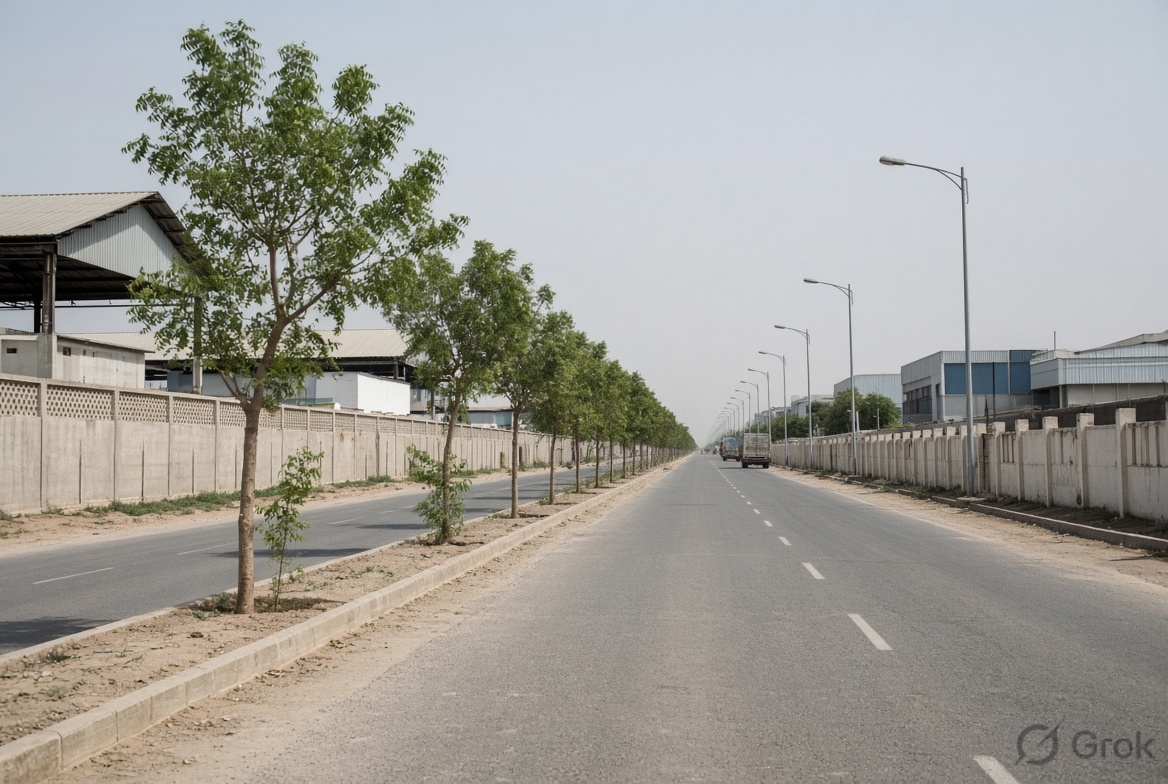
Namo Bharat-The 160 Kms Rapid Rail-Is Becoming A Reality Soon
Third plant (~JPY 10bn) tracks to Sep 2026 completion.
Read the full story
Namo Bharat-The 160 Kms Rapid Rail-Is Becoming A Reality Soon
Third plant (~JPY 10bn) tracks to Sep 2026 completion.
Read the full storyThe only Namo Bharat line that is running is Delhi to Meerut. Everything aimed at Shahjahanpur, Neemrana and Behror is still paper.
In July 2026 the Union Minister of State for Housing and Urban Affairs, Tokhan Sahu, told the Rajya Sabha that NCRTC had sent detailed project reports for four more corridors. Two of those names matter here. One is Delhi-Bawal. One is Bawal-Behror. He said the reports were under scrutiny before any decision on money. That is the official status. Proposed. Under review. Not sanctioned as a works order.
On 3 September 2026 Metro Rail News reported a meeting in Jaipur chaired by Chief Secretary V. Srinivas. The subject was a supplementary DPR for the Bawal-Behror piece of the wider Delhi-Gurugram-Rewari-Alwar idea. The report put the cost at about ₹7,747 crore, including land. It named four planned stations. SNB border. Shahjahanpur. Neemrana. Behror. It said the Chief Secretary told departments to complete their work and move the DPR forward. It also said Rajasthan still needs to send in-principle approval to the Union ministry.
Sources tell a list of 22-station lists and travel times of 100 minutes. Those numbers are not treated here as one locked alignment until NCRTC and the two states publish one signed DPR.
This matters in Neemrana because a real station would change how plant staff, auditors and families leave the NH-48 grind. Hotels and rentals would then have a timetable to test. They do not have that timetable today.
The commercial gap is a public ledger that dates every DPR, cost-share note and land notice.
Delhi Meerut Corridor success and Delhi Karnal stretch, RRTS is going to be approved out of the Cabinet soon. This is going to bring overall development to Neemrana.

SNB 2041 Is A Published Land-Use Map, It Is Not A Built Town
Supplementary DPR and funding under Rajasthan review.
Read the full story
SNB 2041 Is A Published Land-Use Map, It Is Not A Built Town
Supplementary DPR and funding under Rajasthan review.
Read the full storyBIDA puts Shahjahanpur-Neemrana-Behror 2041 on its planning page with a map and a report. That listing is an official planning framework. A colour on the map is not a road, a house or a budget.
The same website shows three master-plan entries. One heading reads Shahjahapur-Neemrana-Behror 2041 on the portal. Readers can open a map view and a report view.
BIDA has also posted zonal sheets for the urban complex. A Zone F proposed land-use drawing marks proposed roads, municipal limits, village limits and a KBNIR boundary. Officer titles from BIDA are on the sheet. The sheet itself says proposed. Proposed is not constructed.
Property websites repeat large population numbers and an airport. Those pages are not the BIDA portal. This story does not treat them as the plan text.
People who live and work here still need to know which band is meant for homes, factories, shops, public use or green space, and which line is only a road drawn for 2041. A master plan sets a long horizon. It does not lay water mains, shade or worker housing by itself. Reading the map as delivery creates false certainty next to live RIICO plots.
Plot-level leave, setback and access still have to be checked against the notified sheet and later change orders. Money and year-wise works live in another file. The useful next product is a short note that pairs each land class with the road, drain and power that exist today.
This issue does not reprint the full land-use table from the official report. Plot-by-plot change history is not in the pages cited above. Hearing dates and later amendments are not compiled here. No budget on the master-plan landing page turns a proposed road into a tender.
Watch BIDA for new notices, revised maps and hearings. Watch whether a zonal sheet moves from proposed to a sanctioned layout. Watch tenders that name SNB 2041 as the parent plan. Those papers show movement. The year 2041 on a title block does not.
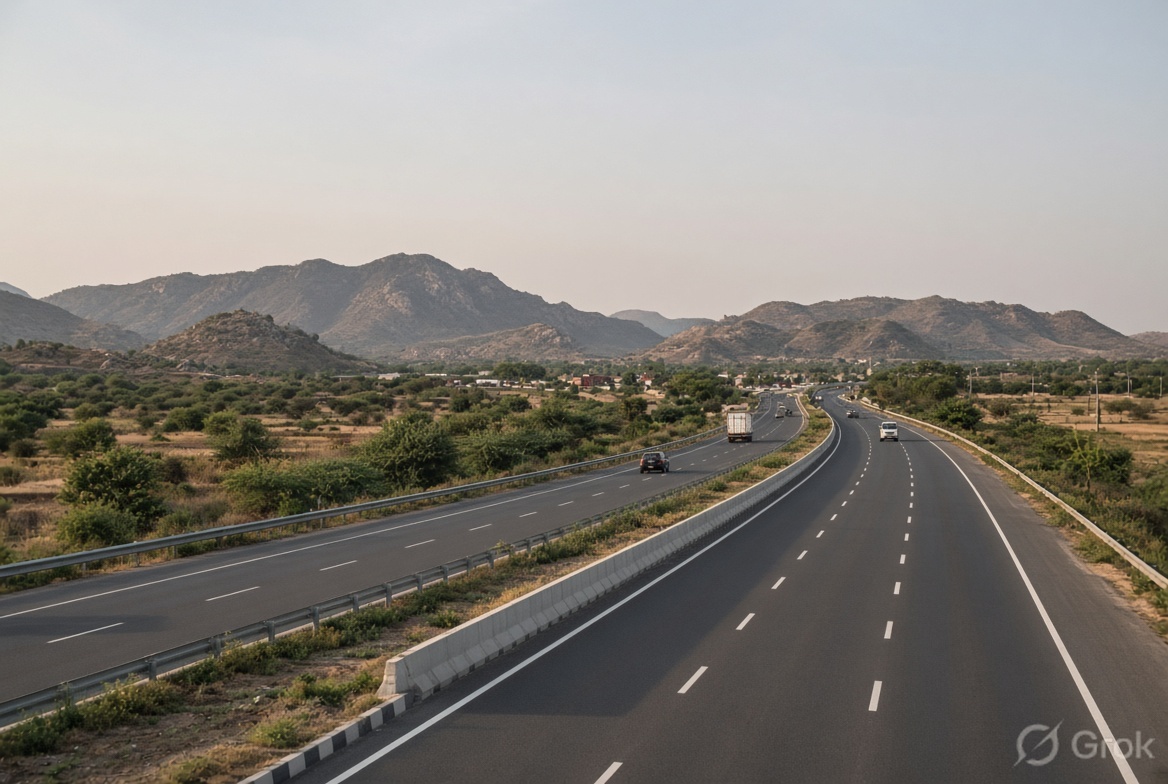
AB InBev India Is On And Already Operational in Neemrana
The live deadline, explained.
Read the full story
AB InBev India Is On And Already Operational in Neemrana
The live deadline, explained.
Read the full storyAB InBev India says a Neemrana plant is already making beer. That is the part that can be printed as operational, and only as the company tells it.
On 7 September 2026 the firm said it had put about ₹200 crore into Rochees Breweries Limited at Neemrana. It said the unit started in July 2026. It said the beer is meant for Rajasthan, Uttar Pradesh, Madhya Pradesh, Jharkhand and other markets. Business Standard, The Economic Times and ANI ran that statement. None of them published a headcount, a water meter reading or a vendor list.
Kartikeya Sharma, the India president, told ET that group breweries had run above 100 percent of capacity in the peak season and that planning had shifted toward FY27. That is a group remark. It is not a measured barrel figure for this shed.
Company directories still pin Rochees to SP 2-3 on the RIICO industrial stretch along NH-8 at village Neemrana, tehsil Behror. An address is useful. It does not prove today’s truck count.
A brewery eats inputs like malt or barley. Hops. Bottles or cans. Cartons. Labels. Crowns. Cold freight. Boiler parts. Pumps. Caustic and sanitiser. Pallet timber. ETP chemicals. Shift labour. Training slots. Those lines become Neemrana work only if someone nearby can invoice them. The press note does not say who won those invoices.
Rajasthan’s pollution board still treats large and medium beer and fermentation plants as Red category for consent. That is a sector rule. A public 2026 consent letter, daily water draw or effluent volume for this start was not in the file used for this story. Until that letter is on the RSPCB search page, water and waste stay a local risk and a local service gap, not a proven circular-economy win.
This is why the supplier map matters more than the ribbon. Packaging converters in Behror or Bhiwadi cannot bid on demand they cannot see. Cold-store operators on the highway cannot size rooms. ITI trainers cannot set a course. Maintenance shops cannot stock seals. The commercial hole is not the absence of a factory. The hole is the absence of a dated bill of materials.
What to watch is dull and useful. An RSPCB consent record in the company name. A hiring notice. A vendor tender. A sentence in a later filing that names local procurement. Those scraps turn a July start date into an economy other firms can plan around. The brewery is on but supplier lines is getting created steadly.
Rooms Are Listed the Market Is Still Uncounted
Effluent-treatment headroom checked as units grow.
Read the full story
Rooms Are Listed the Market Is Still Uncounted
Effluent-treatment headroom checked as units grow.
Read the full storyNeemrana looks full of hotels if you open a booking site. That is the wrong test.
Neemrana Fort-Palace lists itself at the 122nd milestone on the Delhi-Jaipur Highway at village Neemrana. The Neemrana Hotels directory keeps that house in its Rajasthan. That is an operator address.
The same week, travel platforms also show Ramada by Wyndham at M-2 in the RIICO industrial area, Days Hotel by Wyndham on the highway at Shahjahanpur, Cambay Sapphire at plot CC-11, Starlit Suites on NH-8 and other roadside lodges. Those pages flash a price for a chosen night. A flashed price is offered availability. It is not occupancy. It is not a census of every guest house, homestay, serviced flat or worker room between Behror and Ghiloth.
Rajasthan said in July 2026 that homestay and paying-guest registration under the 2026 scheme now runs through the state SSO portal. A June news report said the tourism department planned to ease homestay rules, including a higher room cap, once the last notification landed. Those are statewide process facts. Neemrana-only register of approved homes is to be printed.
Without a dated count of operating keys, weekday load, corporate rates, meeting rooms, backup power and long-stay stock, owners argue in the dark. But the room tariff tells a different story that happens only when there is very high demand.
The Emerald Valley To Begin With A Smaller Land Parcel
Corridor freight via the DFC terminal.
Read the full story
The Emerald Valley To Begin With A Smaller Land Parcel
Corridor freight via the DFC terminal.
Read the full storyThe Emerald Valley is a development vision is to be read Neemrana Signal reads it as a project thesis. It is not an invitation to buy land to set up an IT unit, a Tech University or a sustainable hub as yet.
Project describe sa 3,000 acre sustainable technology district and a 1,500 acre first phase. Those figures are supplied by the project.
Neemrana already has live factories, a highway hotel strip and an official SNB planning map. Those facts belong to other desks. The Project Emerald Valley is a futuristic project for building a sustainable IT hub, IT and AI education, and futuristic education that would create tomorrow's skills. Our education system is not making the youth employable therefore this project aims to creates fully employable industry trained individuals and the call for training 1,00,000 a year is an ambitious call but not undoable.
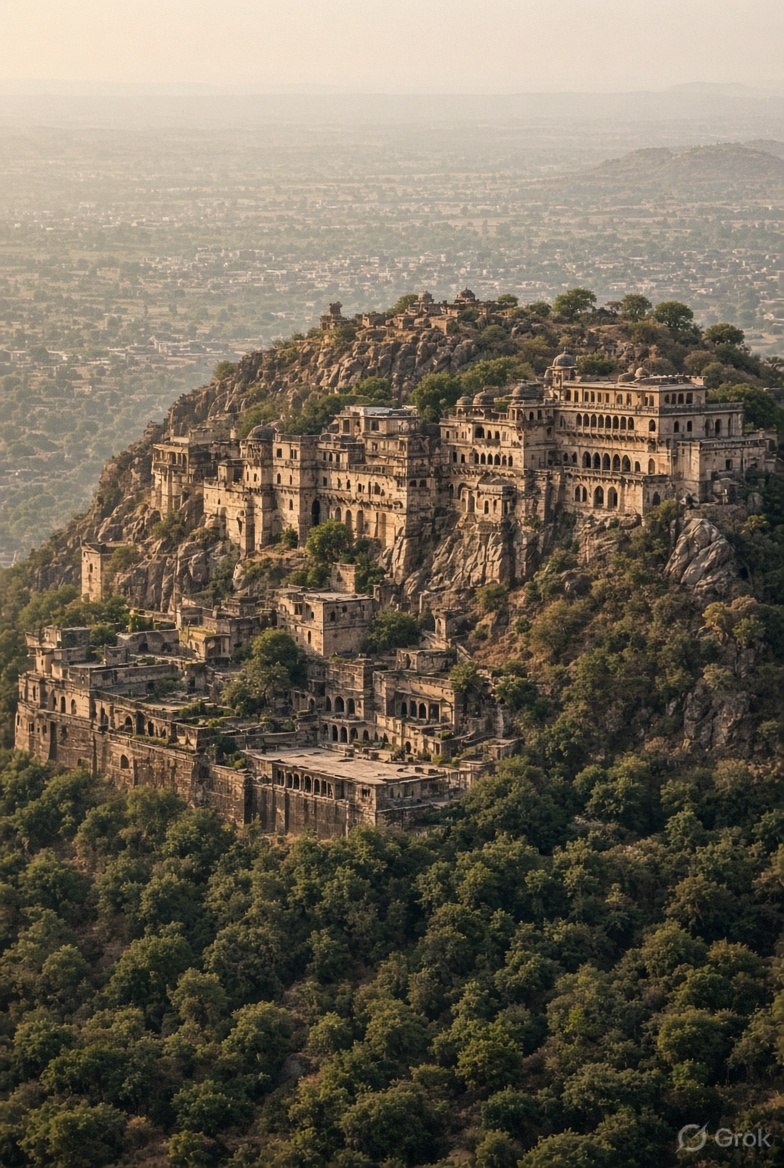
A Japan-Ready Home Is A Home As A Service With a Brand Name Bristone
Rooms/rates snapshot for visiting teams.
Read the full story
A Japan-Ready Home Is A Home As A Service With a Brand Name Bristone
Rooms/rates snapshot for visiting teams.
Read the full storyBristone is creating Japanese and Korean residences. Neemrana Signal has identified the brand and the site. The project that has already gotten approved RERA classification is an investible project.
It has land record right on the National Highway, sanctioned plan and Bristone is already creating awareness about the project.
What makes this project unique and interesting is that Neemrana has shortage of homes for Japanese and Korean. Most of expats stay at long distances mostly in Gurgaon in homes like Central Park etc leased by their companies for long term basis.
But that does not come by choice. If Neemrana had houses for expats, they would have stayed there and not commuted daily. Therefore, the Bristone management led by Amit Gehlaut sensed this opportunity long back and he started serious work on the opportunity.
Amit told Signal that right now he has offerred leasing opportunities to those seeking them and plans to build 1000 serviced and managed living after the first phase with about 400 One Living Dining Kitchen units are built.
Bristone is a uniquely pitched and rentals that old properties are fetching for a similar unit today is Rs.1.5 lakhs and by the time the unit is built the rental shall go to the tune of Rs.2 lakhs. Asked why he has kept the prices so low, he says the first lots will be used as a pilot test because the company wants to build more than 10000 one LDK units in the next five to seven years.
Signal shall keep tracking the story of Bristone further. But the corridor question is older than any one name. Japanese and other foreign plants have used Neemrana and Ghiloth for years. Engineers fly in for a line change. Managers stay through an audit week. A few families try a longer posting. They need the same unglamorous stack. Water that comes out of the tap at a usable pressure. Power that holds a night shift. Internet that survives a cut. Food they can eat without a weekly drive to Gurugram. A clinic that can take a call after 10. A driver who knows the factory gate. A lease an accounts team can pay. A desk that answers when the air-conditioner dies in May.
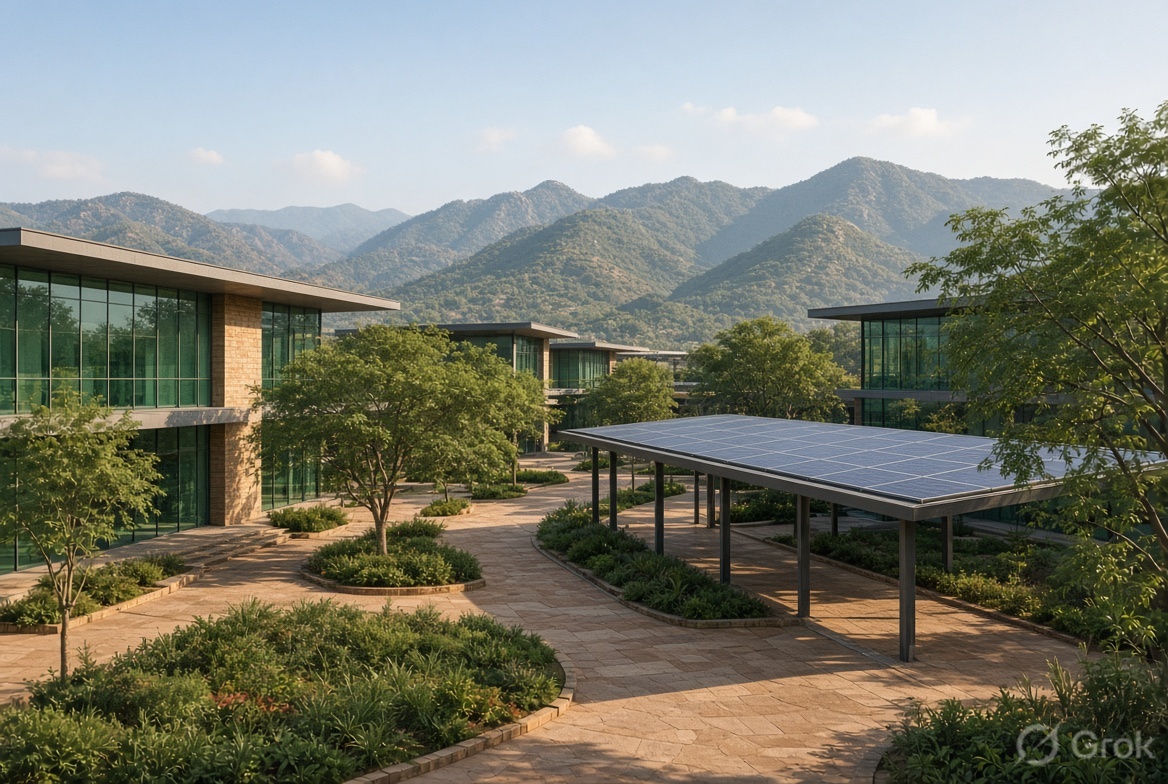 Proposed concept
India's First Japan Only Industrial Pocket Is On The Neemrana Highway, And Coming Are Moving In
Real water/mobility item, separate from the pitch.
Read the full story
Proposed conceptIndia's First Japan Only Industrial Pocket Is On The Neemrana Highway, And Coming Are Moving In
Real water/mobility item, separate from the pitch.
Read the full storyArtist impression · Proposed concept · Not allotted land
The Japanese Zone at Neemrana is not a metaphor. Japanese companies keep on moving into it. It is a RIICO industrial park with a country-specific reservation that grew after a July 2006 memorandum between RIICO and JETRO. Phase III of the Neemrana estate was set aside for Japanese firms. Plants began arriving in the years after that pact. JICA-era field notes already counted production units there by 2011.
How many firms. The number depends on the date and who is counting.
JETRO’s May 2024 briefing said about 50 Japanese companies had clustered in the dedicated zone, with occupancy near nine-tenths, and that the local presidents’ group listed 48 firms as of April 2024. Japan’s METI progress note in the same period put 49 companies in Neemrana Industrial Park.
Signal traced Nidec’s third-plant groundbreaking on 21 May 2025 and it was said that the township at more than 51 companies, about ₹6,500 crore of cumulative investment and employment for over 26,000 people. RIICO’s managing director said the original Japanese Zone was getting saturated and pointed investors to a second dedicated zone at Ghiloth of around 200 hectares.
RIICO’s own handle on 12 August 2026 posted a later snapshot. More than 50 Japanese companies operating. More than ₹8,500 crore of investment catalysed. More than 29,000 employment opportunities. That is the corporation’s public claim. It is not a factory-by-factory audit published with the tweet.
But in fact it is 1,161.47 acres. More than 54 companies in production. Annual revenue described as more than ₹10,000 crore. Who is there. Auto parts and machines dominate.
Nidec is building a third Neemrana plant for steering motors, pumps and related parts, with a stated aim to run by September 2026.
Tokai Rika Minda held a groundbreaking in 2023 for a second India site inside the park. Rajasthan’s 2026 semiconductor policy note names Daikin, Nidec and Tokai Rika Minda as Japanese anchors in the Neemrana-Ghiloth belt. Older JETRO lists and local reports also circulate Daikin, Hitachi-group units, Toyota Tsusho and other component makers.
What the zone is not. It is not the whole of KBNIR. It is not Ghiloth. It is not every Japanese firm in Rajasthan. Business volume is cited as investment stock and, in one local report, yearly revenue.
The working picture is this. A 2006 RIICO-JETRO deal created India’s first Japan-reserved industrial pocket at Neemrana. By 2024–26 official and corporate counts sit in the high forties to the mid-fifties. Investment claims have moved from about ₹6,500 crore in May 2025 to more than ₹8,500 crore on RIICO’s August 2026 card. Jobs are cited in the mid-20,000s to about 29,000. Ghiloth is the overflow park.
By the 13th of September, as we kept counting, the companies are moving in and will give us a wider sense of what future lies ahead for us.